


Coloring Books: Markers & Pens


Markers and pens are two great options for working with coloring books.
Even though they produce a solid color, they can be fun to experiment with.
my coloring books


Where to start?

Start with laying out the tools that you are going to use.
Decide on a color scheme.
If you are not sure – use the color reference page for my coloring books (here) or a tutorial on how to choose colors (here).
Don’t forget to check out my tutorial for markers and pens techniques (here).

Backgrounds are a good starting point as they usually set up the mood for a design.
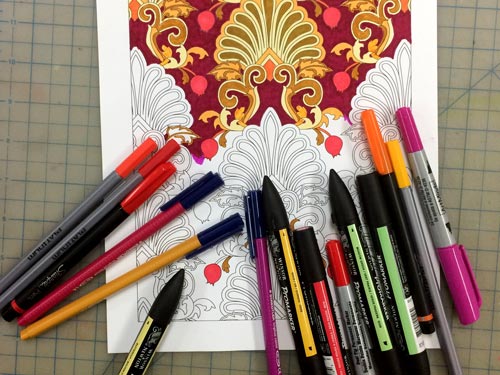
If it gets too much to color with one color – there is no "coloring police" to stop you from switching to other design elements.
Marker or pen?
When choosing markers or pens for coloring, think about the look you want. Brush-tip markers are great for soft blending and smooth shading, while fine-liners are perfect for small details and crisp outlines. Chisel tips cover big areas quickly, and gel pens add shine and accents on top. You can even mix them—use markers for base colors and pens for patterns and highlights.
Blending colors
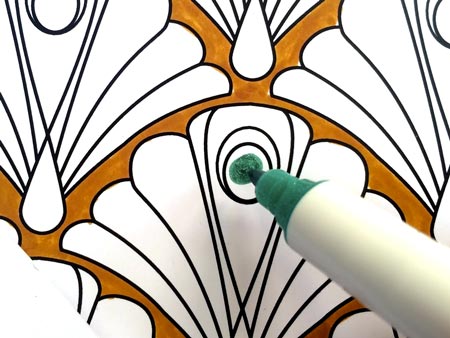
Start light.
Begin with your lightest color and build up to darker tones. It’s easier to darken than to lighten.
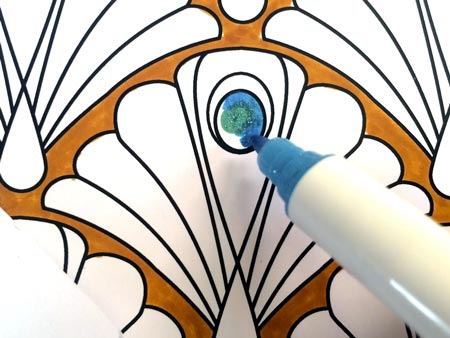
Blend while the ink is still wet.
Markers blend best when the colors haven’t dried yet. Work in small areas so you can blend right away.
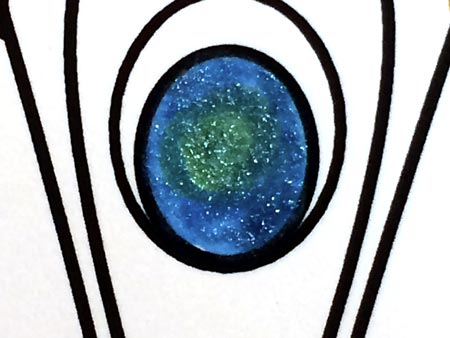
Go back in with the lighter marker.
After adding a darker color, use the lighter one to soften the edge where they meet. This helps the colors flow together.
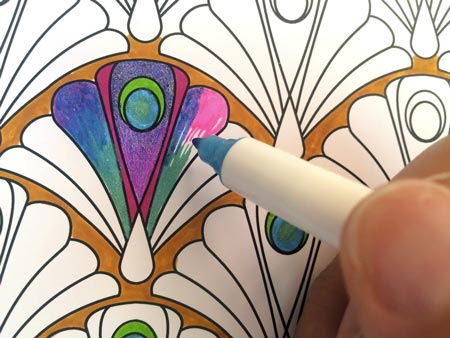
Layer slowly.
Add color in thin layers instead of pressing hard. Multiple light layers blend more smoothly than one heavy one.
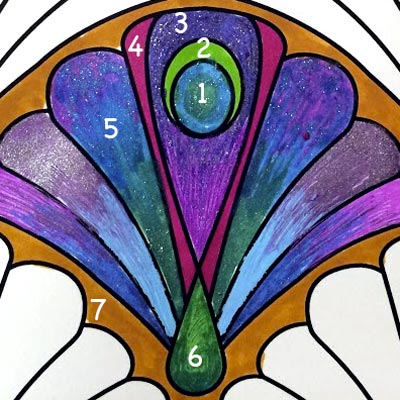
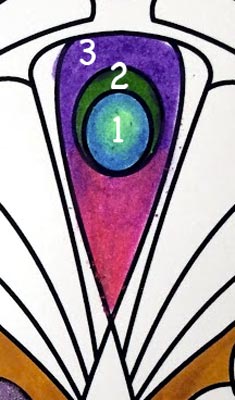
Gel pens
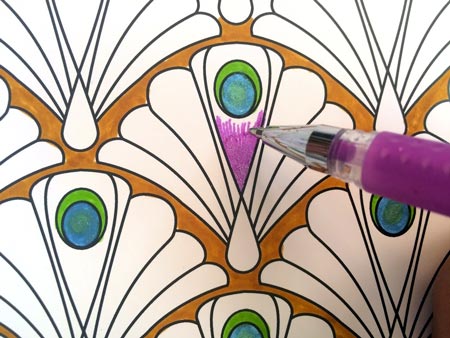
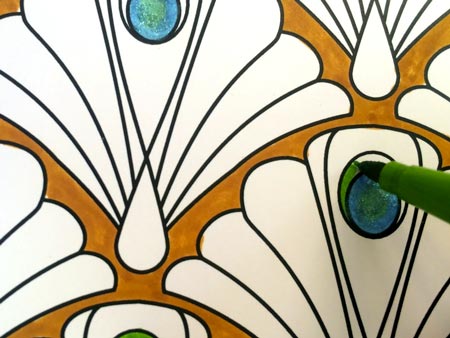
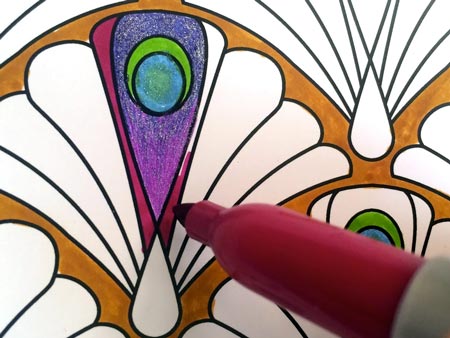
Gel pens can blend beautifully, but they behave differently from markers because the ink is thicker and takes longer to dry. To blend, start by coloring a small area with your first color, and while it’s still wet, quickly add your second color right next to it.
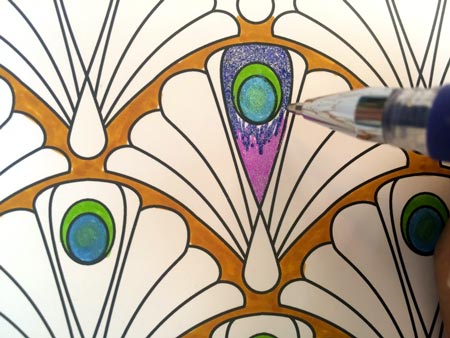
Use light, overlapping strokes where the two colors meet to soften the transition. You can also gently layer one color on top of another after the first layer dries to create subtle gradients or glowing effects.

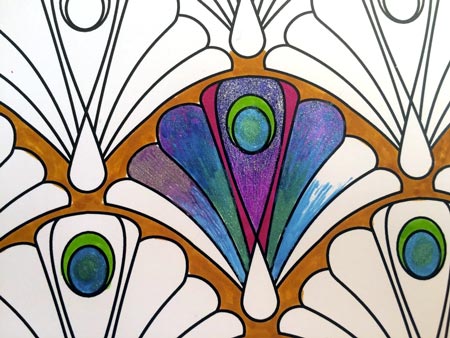
Metallic and glitter gels don’t blend as smoothly, so they work best for accents, not full shading.
Tips & Things to Watch Out For
- Work in small sections—gel ink dries fast!
- Use light pressure to avoid thick, uneven ink pools.
- Test your blend on scrap paper first to see how the colors interact.
- Don’t drag your hand across the paper—gel pens smudge easily until fully dry.
- Avoid layering too thickly—heavy gel ink can crack or become sticky.
- For smooth transitions, try quick, short strokes or tiny circular strokes at the blend area.
- Let each layer dry before adding details, especially highlights or outlines.
Metallics
Tips for Using Metallic Markers & Pens
Use them for accents, not everything. Metallics look most impressive when they highlight certain areas—like jewelry, stars, lettering, borders, or shiny surfaces. If you use them everywhere, the sparkle loses its impact.
Work on darker paper for a wow effect.
Metallic ink really pops on black or deep-colored paper. The contrast makes the shimmer stand out.
Layer after your base colors.
Finish your regular coloring first, then add metallic details on top. Metallic ink sits best as a final step and won’t smear other colors as easily.
Let each stroke dry before going back over it.
Metallic ink can smudge if you rush. Give it a moment to settle before layering or outlining.
Keep your pen tips clean.
If you draw over other marker layers, pigment can collect on the metallic pen tip. Wipe it gently on scrap paper to keep the shine bright.
Use small, confident strokes.
Big scribbles can look streaky. Short, controlled strokes give the ink time to sit evenly and sparkle smoothly.
Layering colors

Markers can be layered to create smooth shading, depth, and new colors—almost like blending paint. To do this, start with your lightest color first. Fill the area completely, then quickly add your darker color while the ink is still slightly wet. Use the light marker again to blend the edge where the two colors meet—this softens the transition and avoids harsh lines. You can also build depth by layering the same color several times: each layer dries a little darker, which is great for shadows. Just remember, markers dry fast, so work in small sections, and layer gradually instead of jumping to your darkest color right away.
