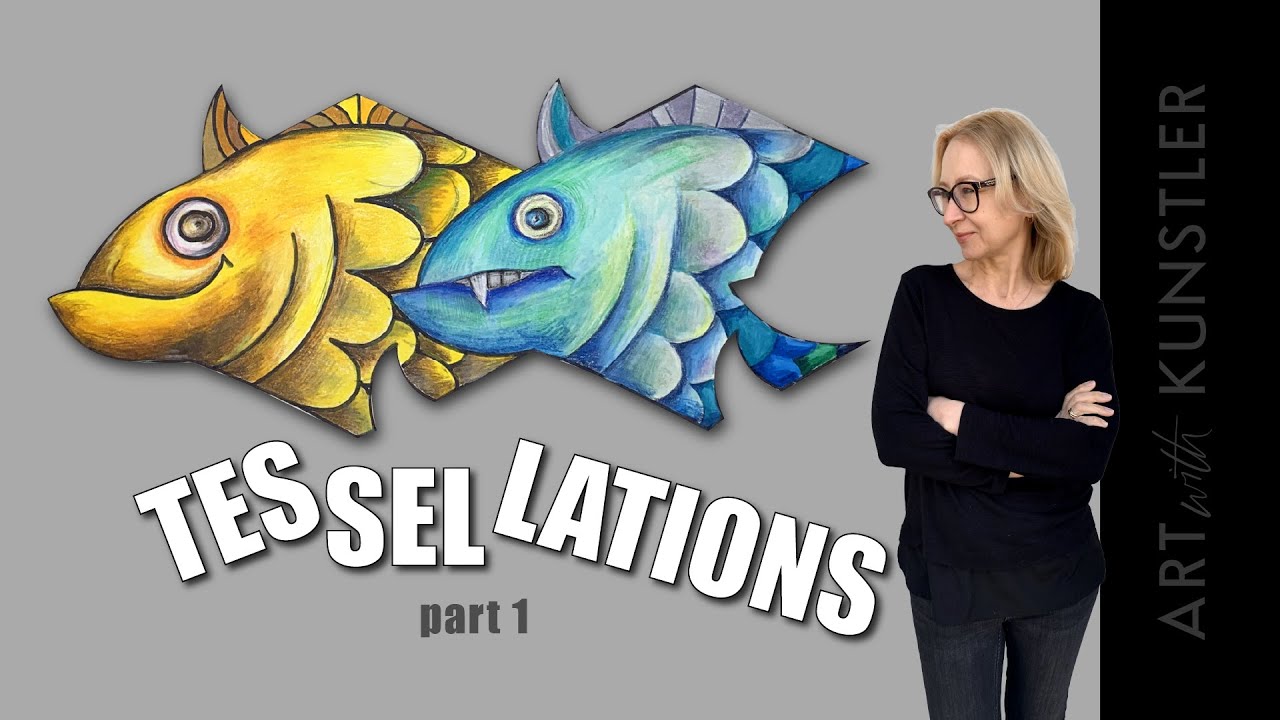
video: about tessellations


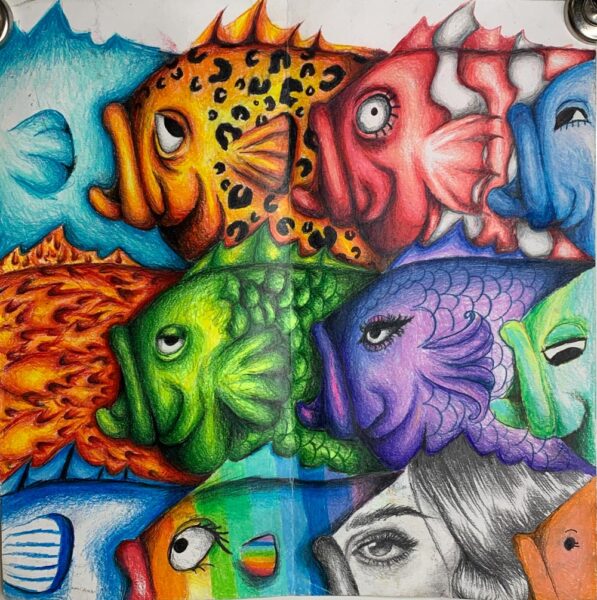
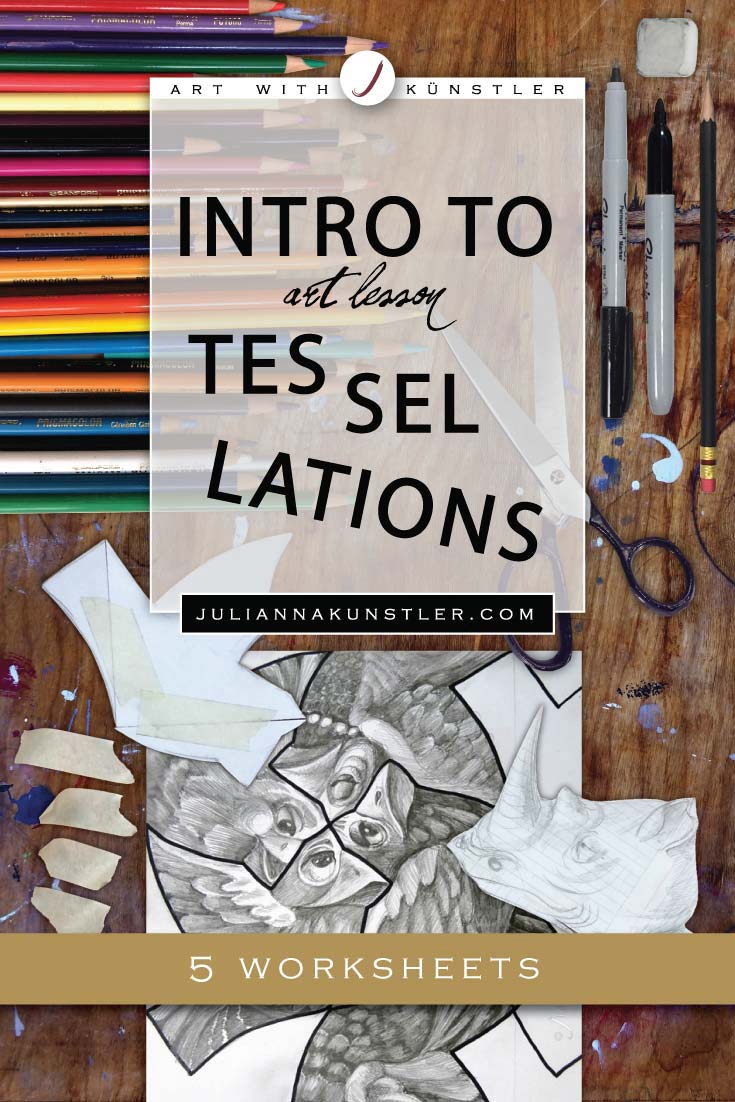
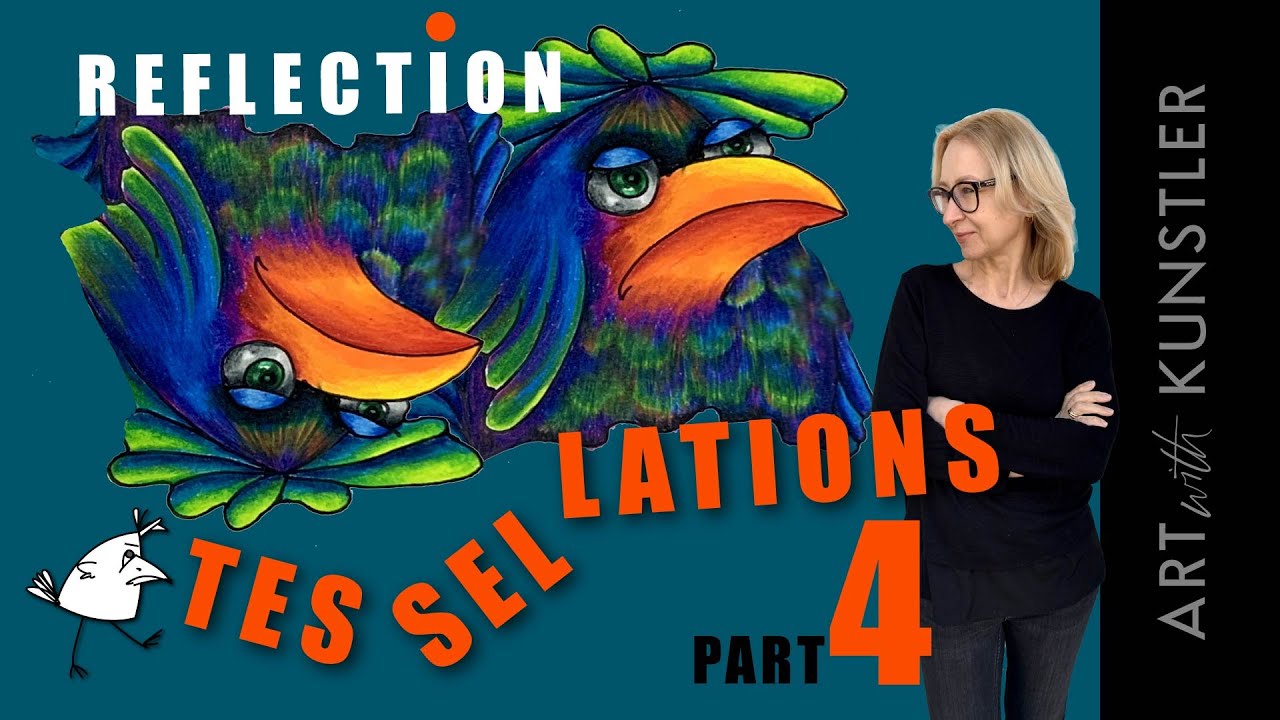
We are using an Repetition Design Principle in this assignment.
Learn about repetition in this presentation.

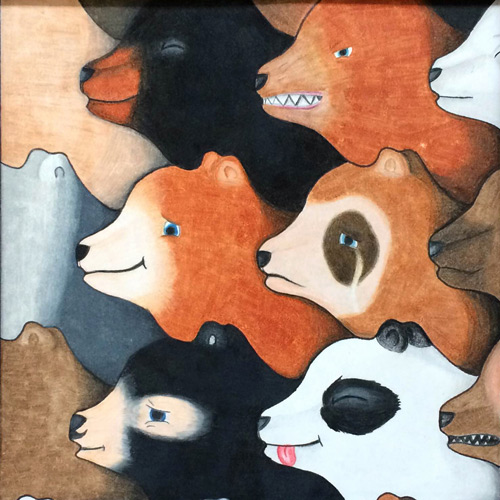


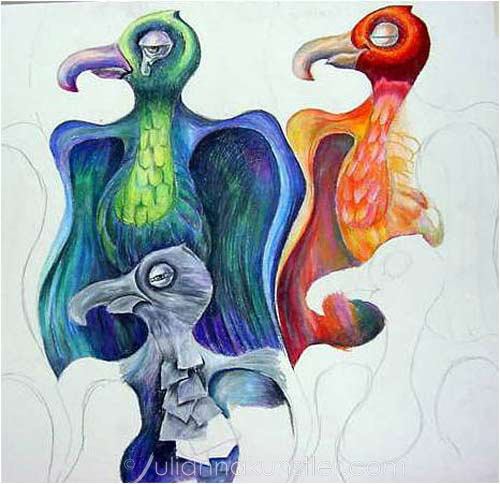

Create a pattern design based on a tessellation.
Start with creating a tessellation shape using the "translation pattern" (see the steps below). Your tessellation should be a recognizable (not abstract) object – animals, birds, insects, fish, etc.
Pick a starting shape – square or hexagon.
Use your handout to plan and practice your tessellation.
Cut the base shape out of your handout.

Draw and cut out details.
Use masking tape to attach the pieces.

Draw a 9"x9" grid with 3" cells on your paper or board.
The border around the grid will depend on the paper dimensions (0.5" border for 10"X10" or 1.5" for 12"x12")
Trace your first tessellation into the central cell.
Continue tracing untill yiu fill in the grid.
Draw details inside each tile. Do not shade!
Draw the details inside each tessellation,
Use Prismacolor pencils to complete the tessellations:

There are few patterns that you can follow to construct a tessellation.
The basic one is "translation" pattern – where you attach the cut out pieces to an opposite side of your shape:
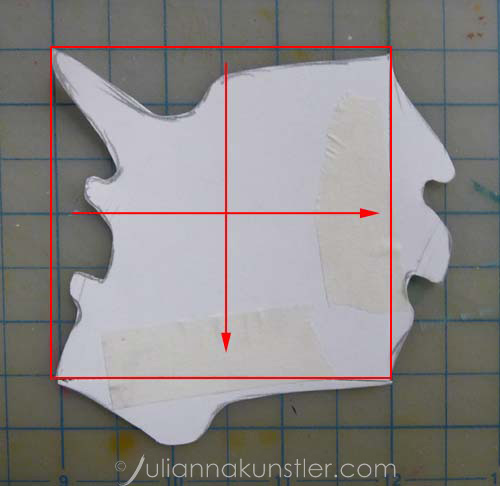

After you sketched the shape – cut out the pieces.
Do not ever throw away any cutouts! They should be attached to the opposite sides.
Slide down the top piece and tape it to the bottom side of the square.
Slide the left cutout to the right side of the square and tape it.

Trace your tessellation onto a drawing paper.

Outline the contour of the tessellation s with a thin marker.

Add details!
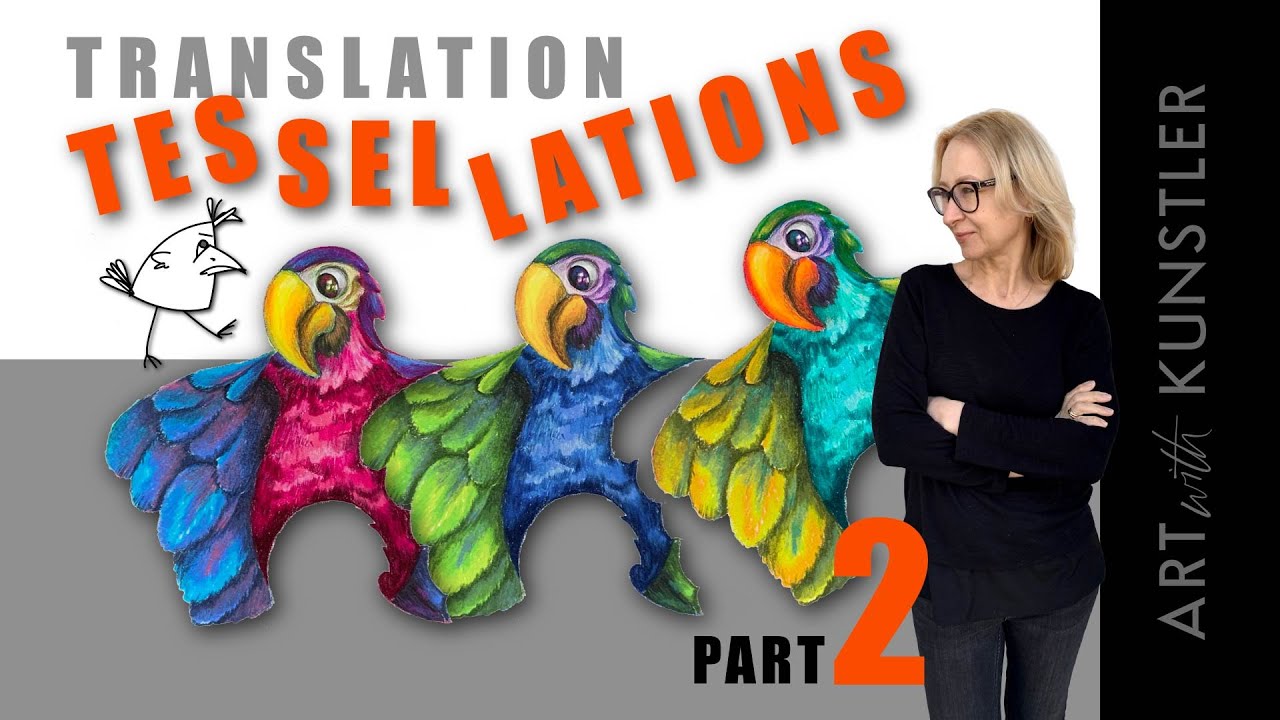
This is an example of a "translation" tessellation pattern,
The bird shape was based on a square.
This tessellation was based on a hexagon.

Another example of a square-based tessellation


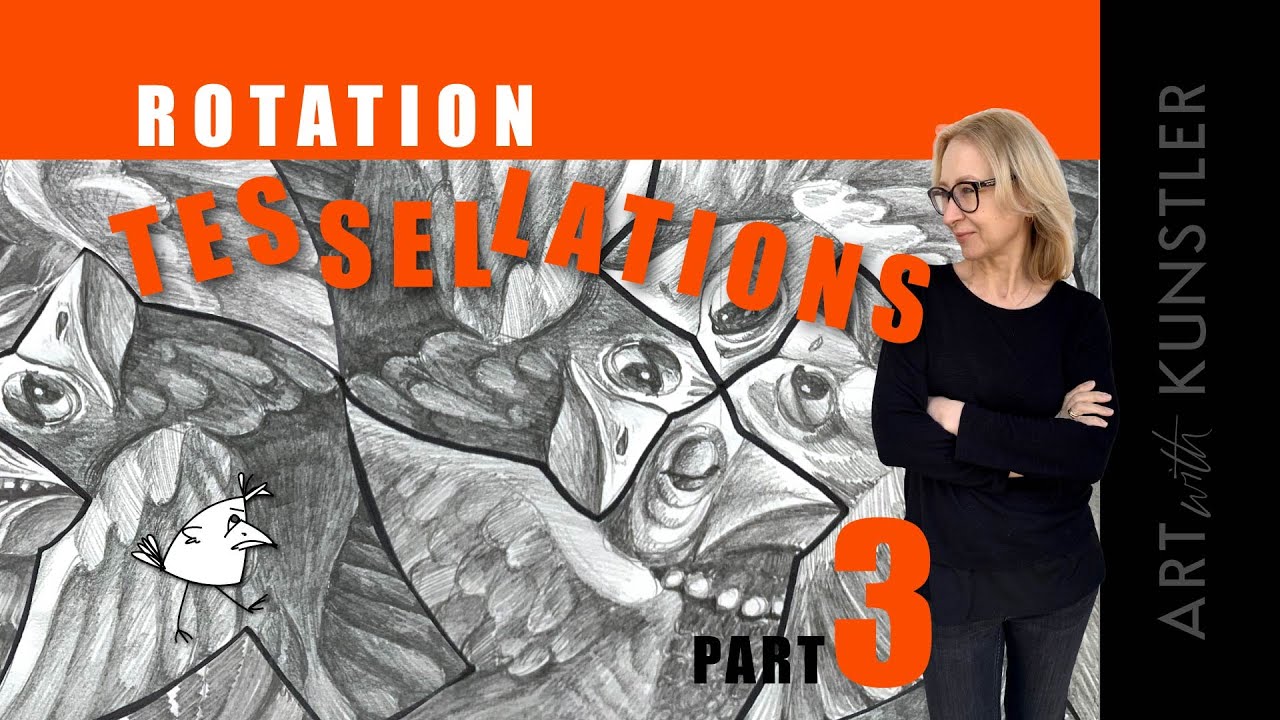
This is an example of a more complex tessellation pattern – "rotation" template.

Instead of sliding a cutout to an opposite side – you rotate it.
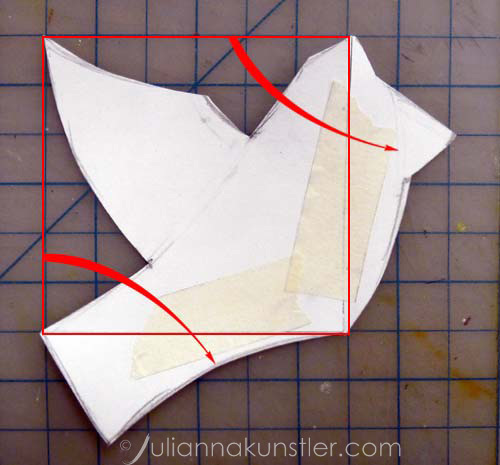
Ask me for more details if you choose this pattern for your artwork.
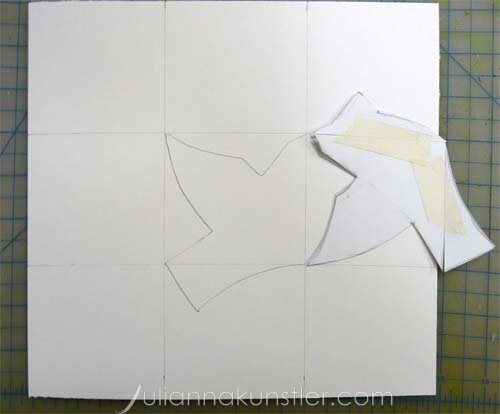
Trace your tessellation onto a board.


Add details to each tessellation.


Try to think of your own tessellation.
Copying someone else’s is not as much fun!


