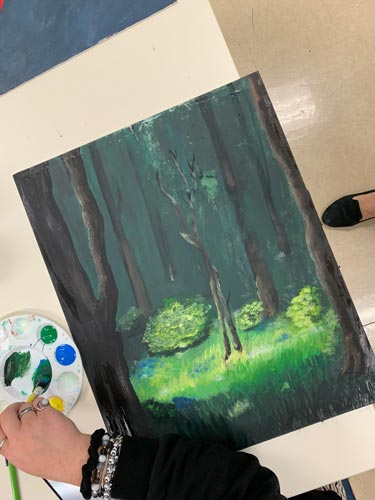
Symbolism presentation


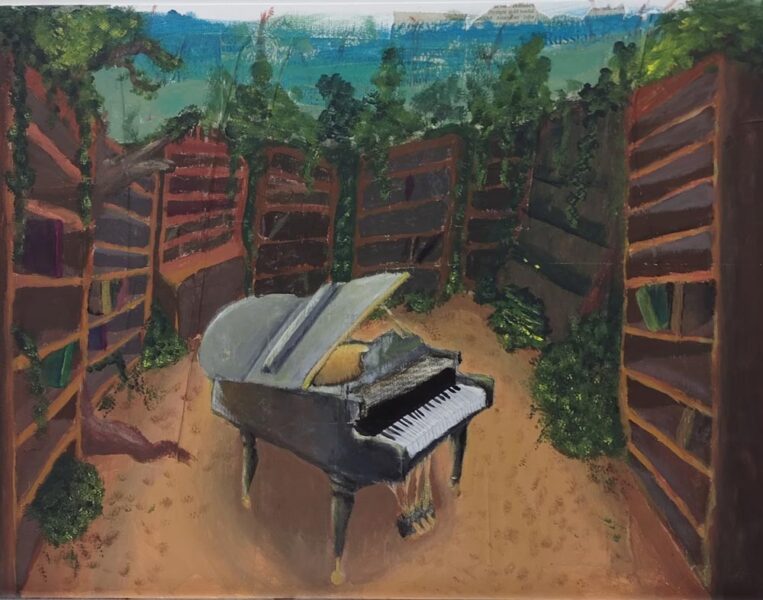
Learn about symbolism. Think of how you can use visual means to depict certain abstract concepts.

Gustave Moreau: L’Inspiration c. 1893
Symbolism was a late 19th-century art movement of French, Russian and Belgian origin in poetry and other arts seeking to represent absolute truths symbolically through language and metaphorical images, mainly as a reaction against naturalism and realism.
Symbolist painters used a wide variety of subjects including heroes, women, animals, and landscapes.

Edvard Munch: Attraction 1896
John H. Wrenn Memorial Collection
They typically gave these subjects deep meanings such as love, death, sin, religion, or disease.
They would use metaphors (or symbols) rather than real life to represent something.

Jean Delville: Medusa 1893
Regenstein Endowment Fund
Symbolist paintings are dim, nightmarish scenes.
The visions are otherworldly and mystical.
You’ll find haunting, mysterious figures, evil women, supernatural monsters and demons, and imagery of sex and death.
The atmosphere is always unsettling and gloomy.

Odilon Redon: On the Horizon the Angel of Certitude, and in the Somber Heaven a Questioning Eye, plate four from To Edgar Poe, 1882
The Stickney Collection
The paintings display objects/symbols that represent abstract ideas.
It is often referred to death and decadence.
Extending the symbolism to a whole painting makes it allegorical.
The artists used mythological characters and biblical events: dark spirits, angels, gods and goddesses.

Max Klinger: Dead Mother, plate ten from On Death, 1889
Joseph Brooks Fair Fund income

James Ensor: Death Chasing the Flock of Mortals, 1896
Gift of Dennis Adrian
The recurring dark theme of death and mortality
(hint: skulls and skeletons)
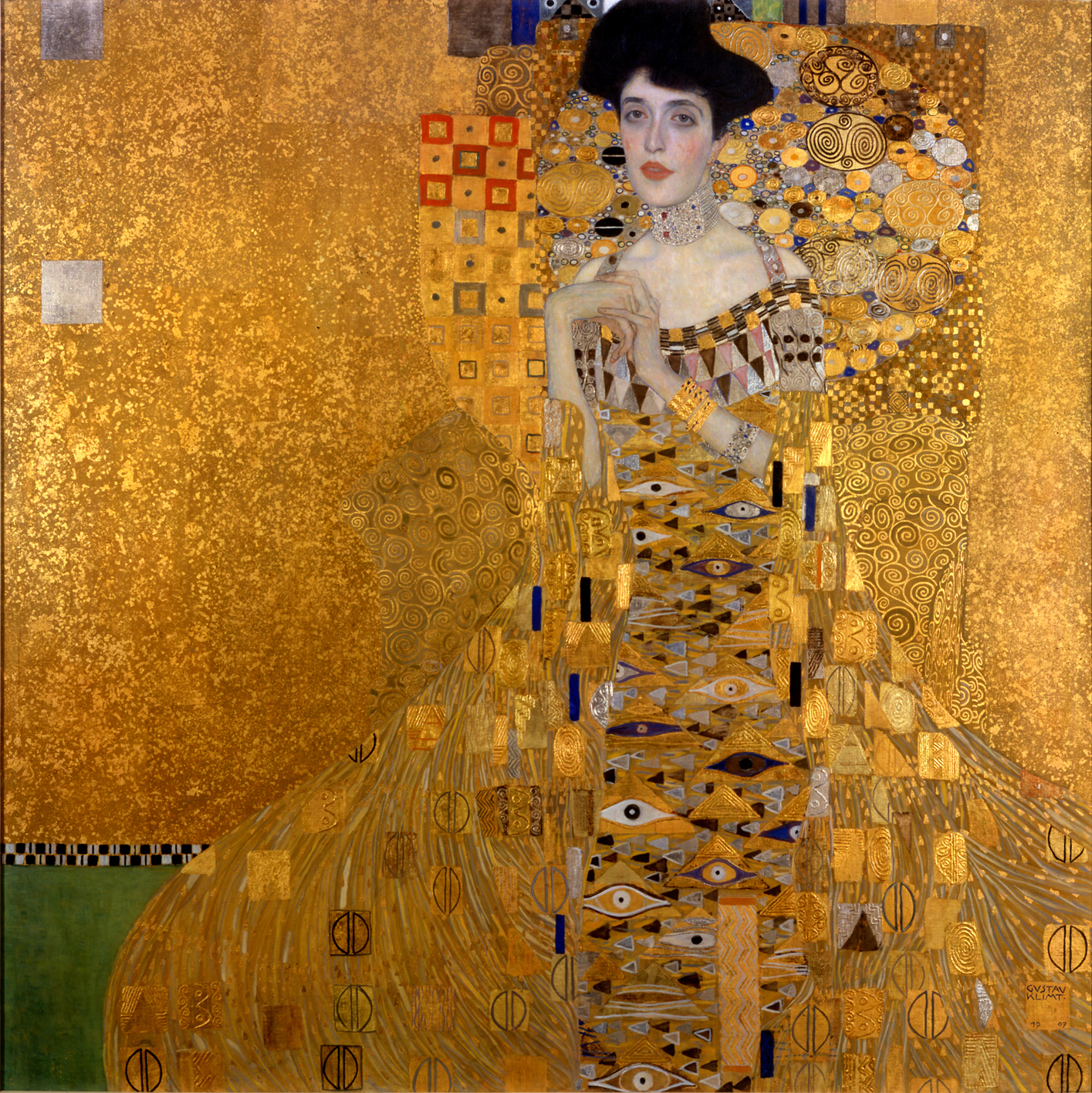
Gustav Klimt: Portrait of Adele Bloch-Bauer I, 1907
Femme fatale.

Odilon Redon: The Chimera Gazed at all Things with Fear, 1886
A world of creepy, disembodied/severed heads, and hybrid human-animal and human-monster creatures.

Edvard Munch: The Scream, 1893
Emphasis on
Interest in

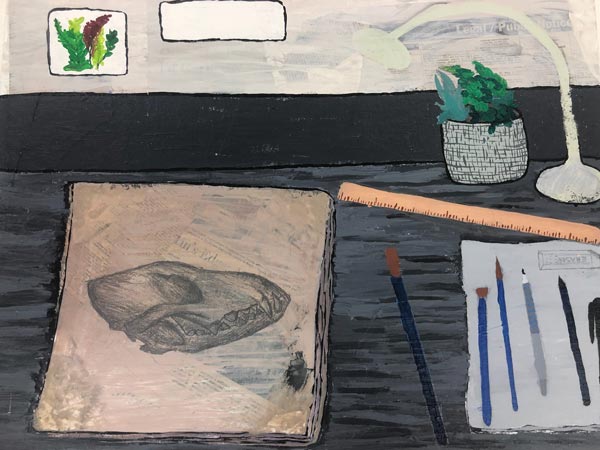
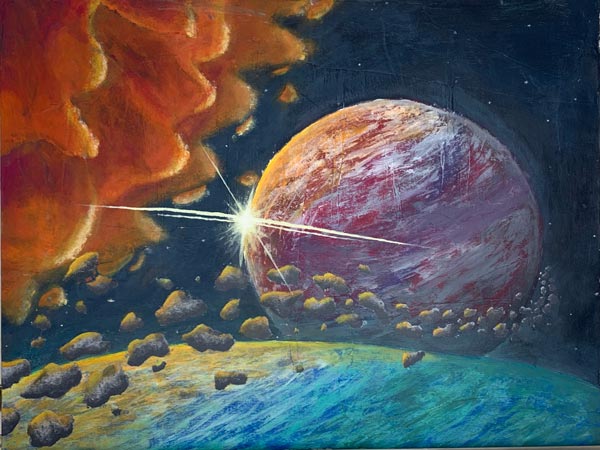
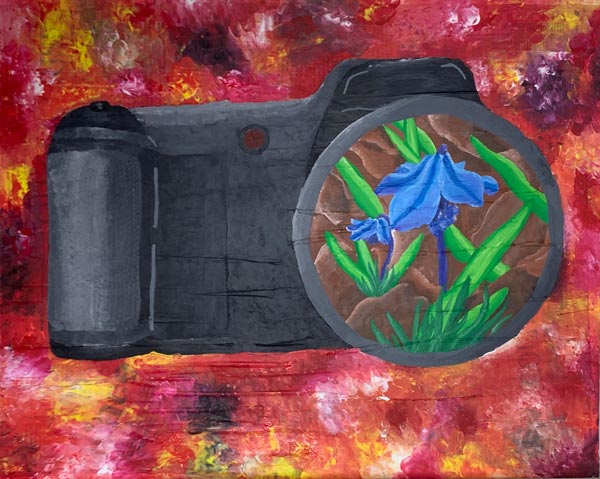
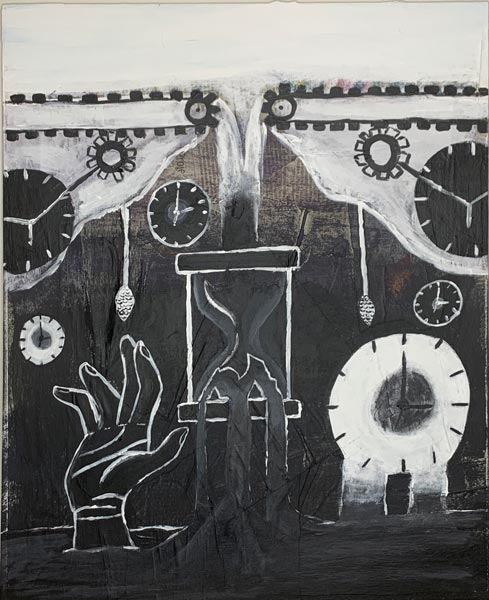
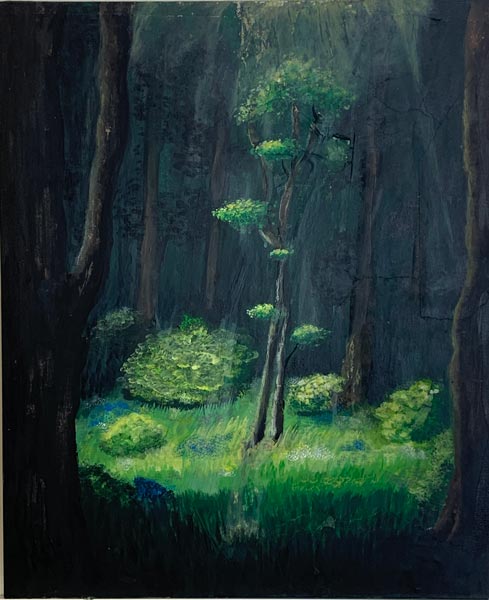
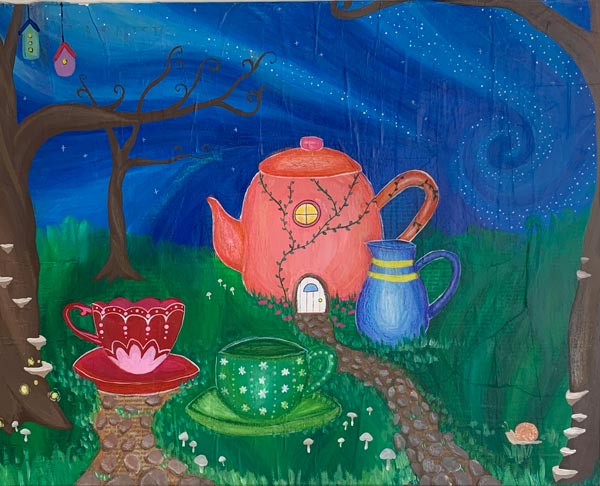


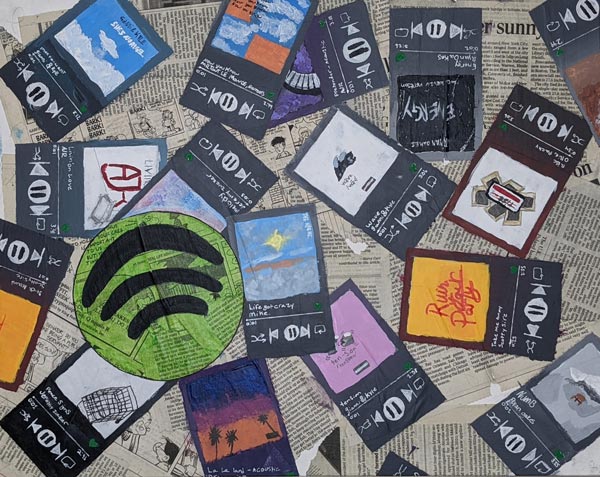
Let’s think of something that brings you good emotions. How can you depict these feelings visually to convey that warmth?
As an option – think of a place that makes you feel safe and happy.
So what is your "safe place"?
It can include:
Collage materials:

Before you sketch – reflect on what place, moments, or things make you feel warm inside.
Write them down and sketch them out.
Pick ONE object to become your focal point. This object will be drawn realistically. Use a reference photograph.
Everything else will be supporting that one object.
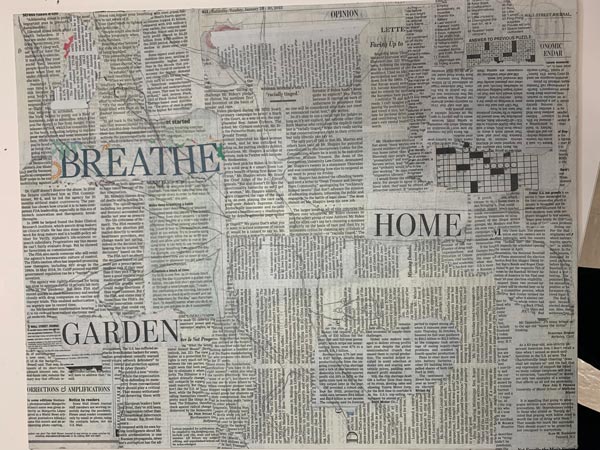
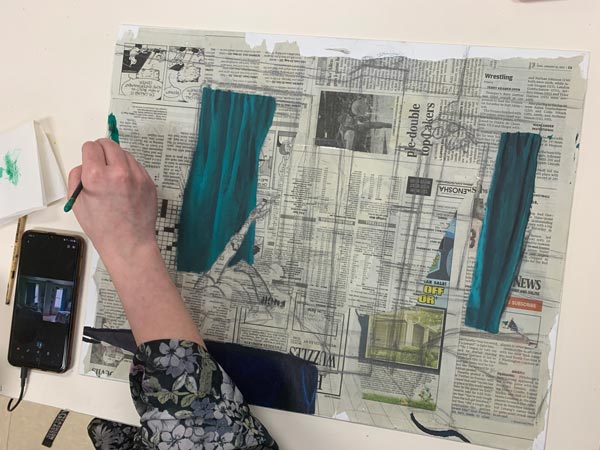
Step 1: Create a uniform surface with local newspaper articles.
Tear the newspaper into smaller pieces and glue them onto the canvas board.
Make sure they overlap and cover the entire area.
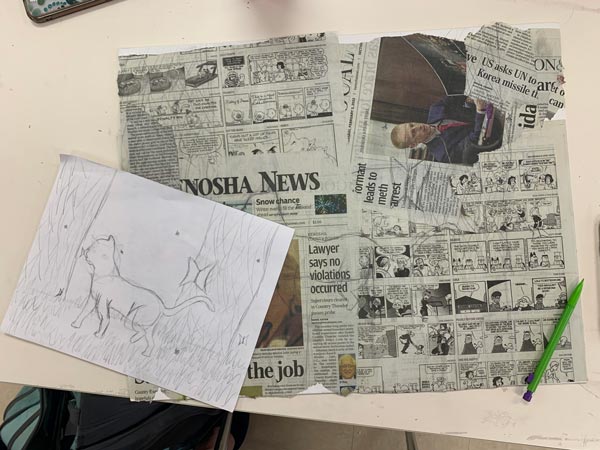
Step 2: Carefully draw a silhouette of your focal point object.
It should cover about ⅓ of the picture plain.
Lay out other objects and elements.
Step 3: Use acrylic paint to emphasize the negative space around your object.
Fade paint into the negative space so some newsprint is visible.
You can use more than one color.
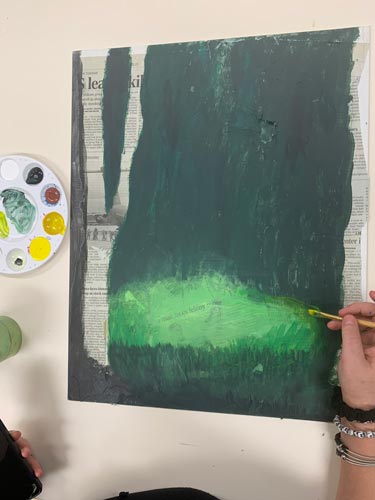

Step 4: Focus on your main object now.
Make it as realistic as possible.
You can use paint or a marker to depict it.
Leave some of the newspaper background visible!