Slab Box

WI State Standards:
- AA Cr10h
Investigate: Engage in critical thinking, problem solving, and research through elements and principles of art and design studio practices and processes.
(aesthetics / problem solving) - AA Cr11h
Plan: Formulate original concepts by practice, experimentation, and revision. (planning/experimentation) - AA Cr12h
Make: Create works of art that introduce students to media, care of tools, and basic craftsmanship skills.
(skills)
Learning objectives
- creative project: planning and executing
- conditioning clay
- following the process
- slab box construction
- glazing
The slab method uses flat sheets of clay that are rolled out evenly and then cut into shapes, much like working with dough. These slabs can be joined together to make geometric forms, like boxes, or draped over molds for more organic shapes.
The slab technique is great for creating pieces with straight edges, flat surfaces, and architectural qualities, while still allowing for creativity in texture and design.
The slab building technique involves rolling out clay to an even thickness – usually 1 cm – then cutting shapes, folding, bending, manipulating and joining together to form a finished object.
Slab objects are left to dry EVENLY before bisque firing for at least 7 days – turning regularly
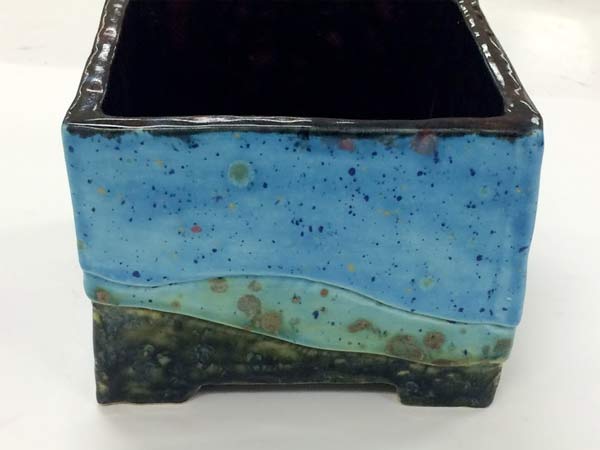
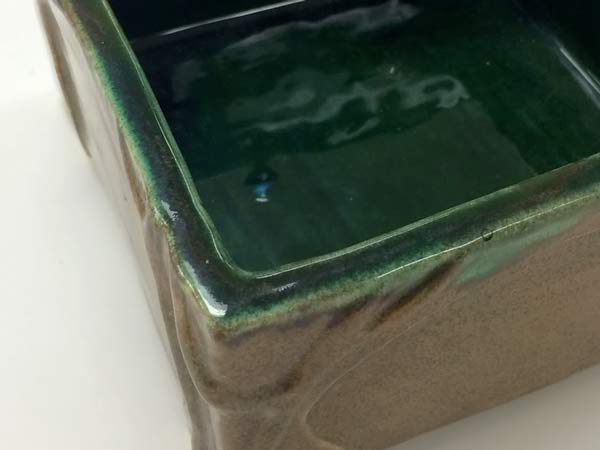
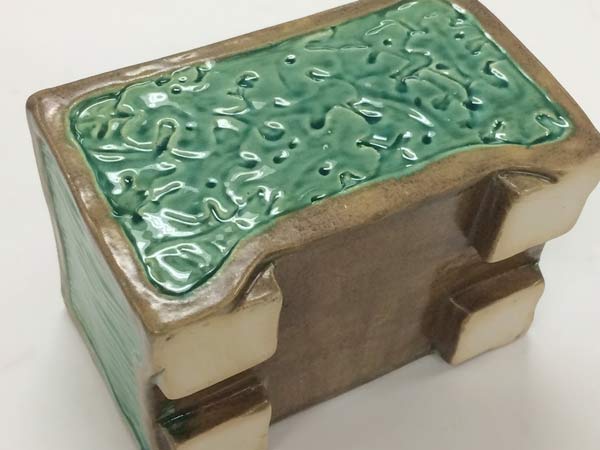
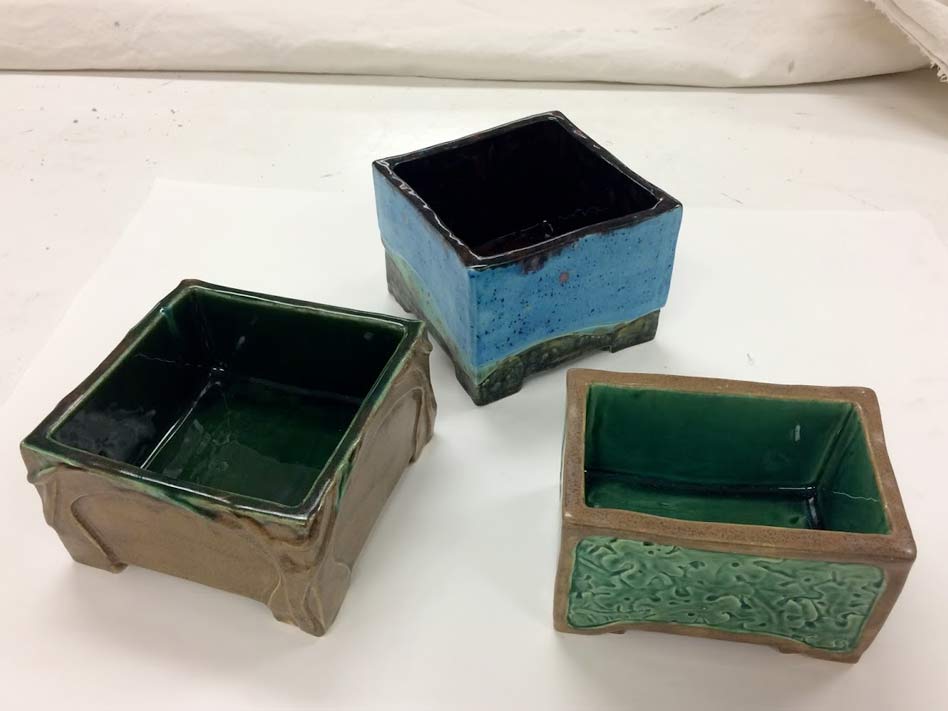
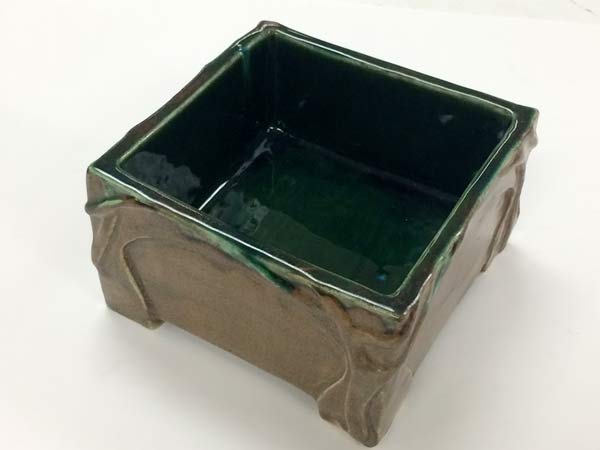
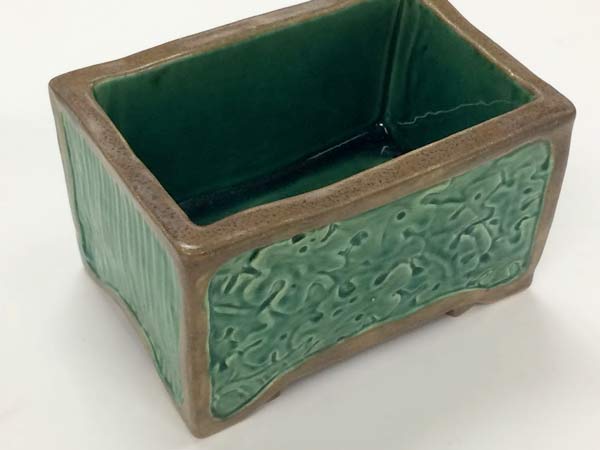
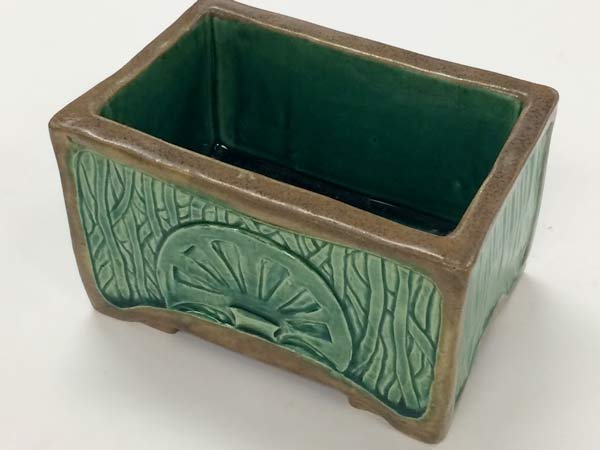
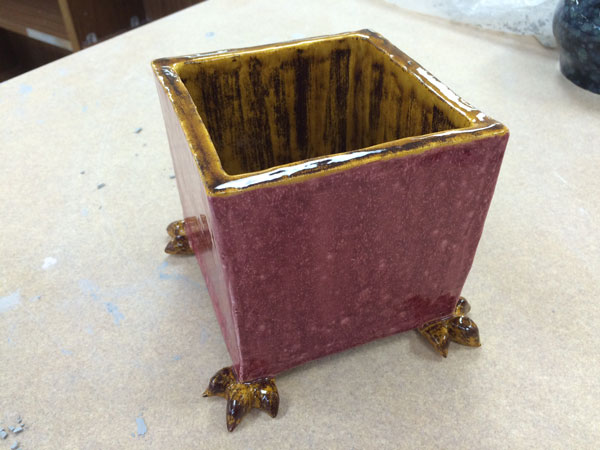
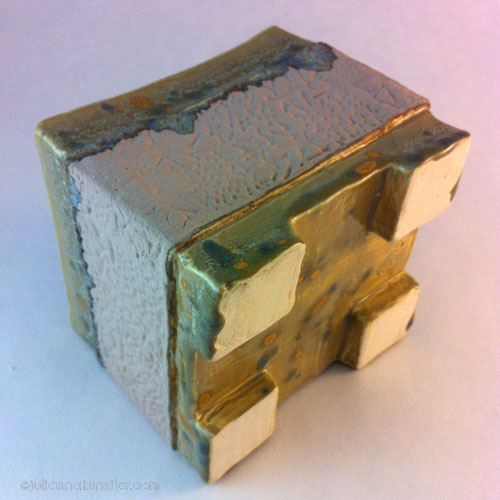
examples:


STEPS
step 1- rolling
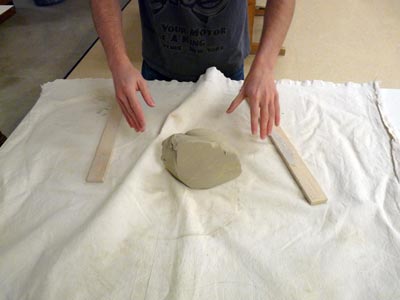
Start with wedging and throwing clay on a flat surface (covered with canvas).
Spread the clay out by patting it with your whole hand.
Flip the clay over carefully.

Place wooden strips (guides) on beth sides of the clay to help you achieve an even thickness of 1 cm.
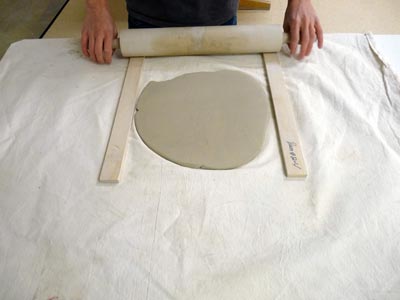
Roll the clay.
step 2 – cutting
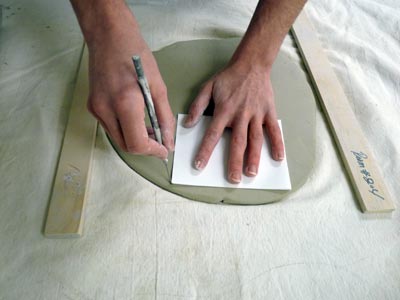
Create paper stencils for the box’s sides.
Trace/cut with a needle tool.
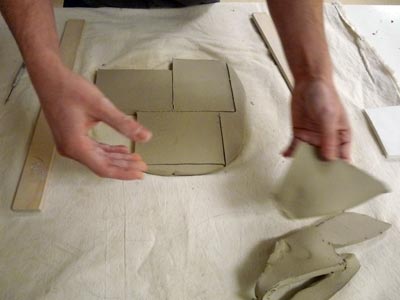
Remove the leftovers first.
step 3 – putting together

Place the 4 sides aside. Let the clay firm up to become leather dry. (For most clays it would take about an hour).
You can roll a slab for the bottom of the box now.
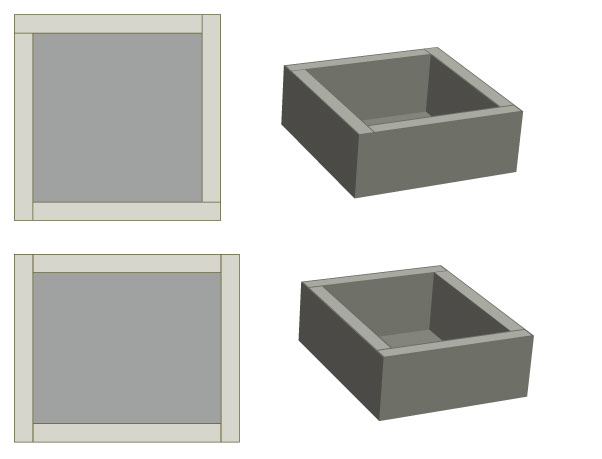
There are two ways to pit the box together.
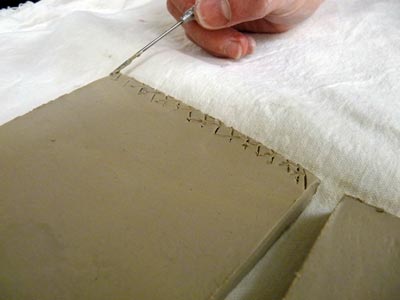
Use a needle tool to score the edges of the slabs that are going to be joined.

Apply slip to scored areas
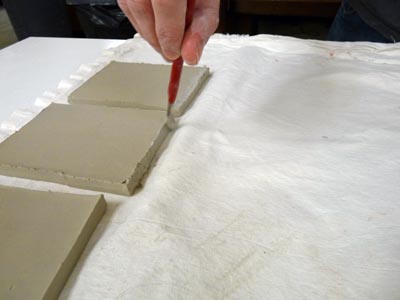
Make sure you score and slip both joining surfaces.

Carefully join the sides.
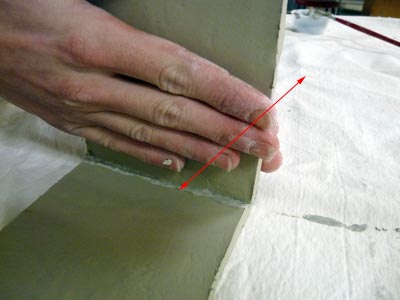
Slightly rock the attached piece back and forth to strengthen the bond between the surfaces.
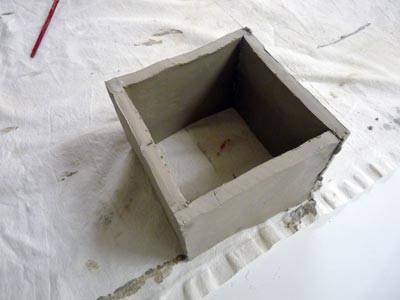
You will know you have a good bond when most of the slip has squeezed out and the pieces will not slide back and forth easily.

Place the 4 sides over the "bottom" slab.
Make sure the sides are straight.
Use needle tool to cut away the extra clay.
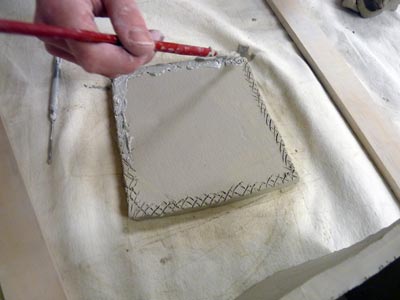
Score and slip.
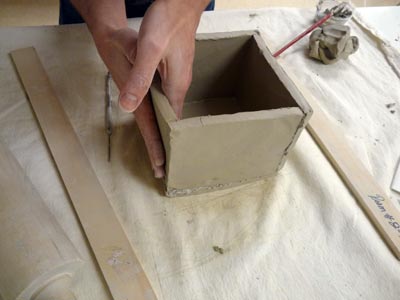
Join all parts together.
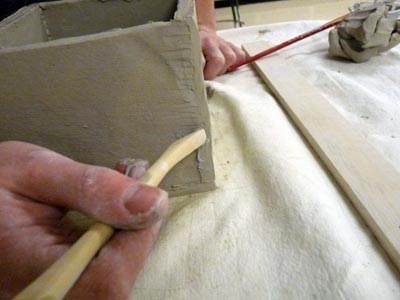
Use a flat wooden modeling tool to smooth the joined pieces.
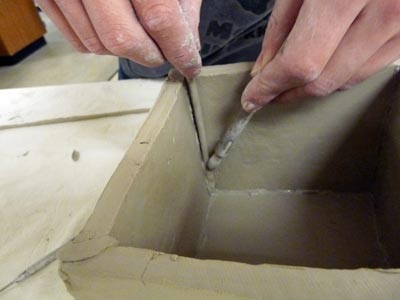
Add a coil in the corners to make seams stronger.
Gently press the coil into the corner.
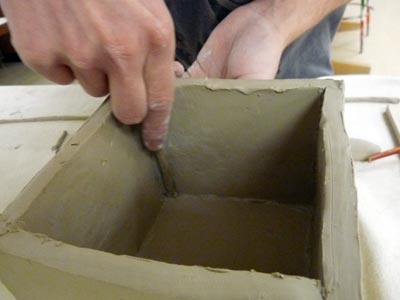
Use a brush handle to smooth the corners.
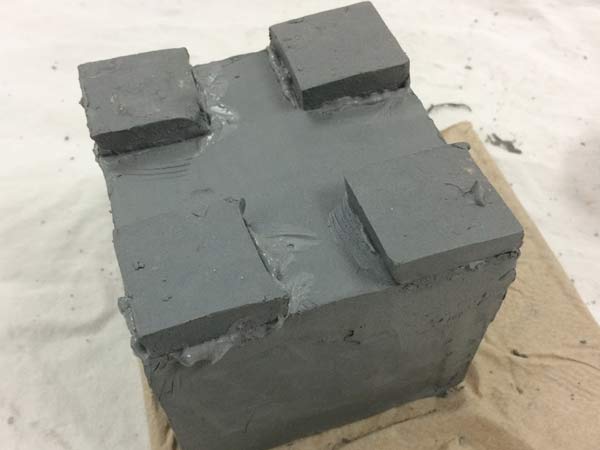
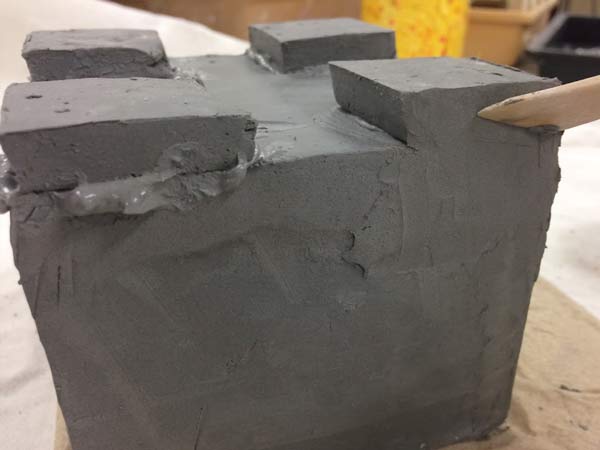
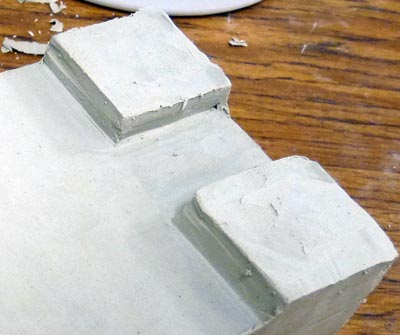
step 4 – add feet
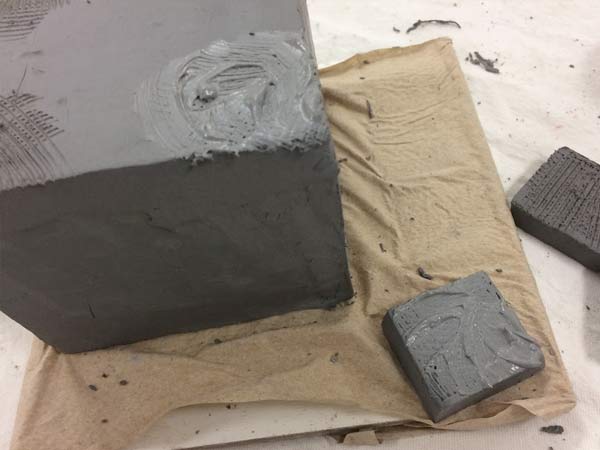
Use the same steps to cut out 4 feet for the box.
Score and slip.
Attach
step 5 – finishing
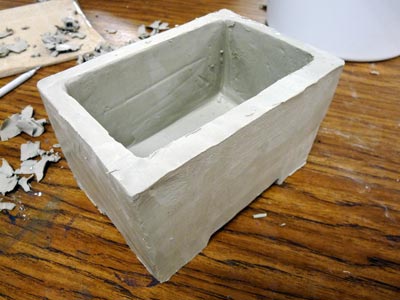
Smooth all seams and surfaces so they look like one solid piece.
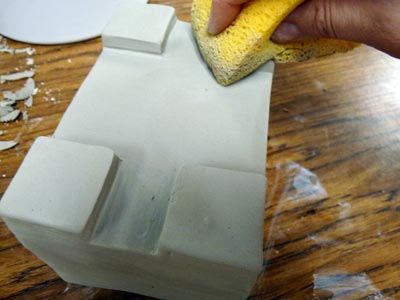
Use damp sponge to smooth it more.
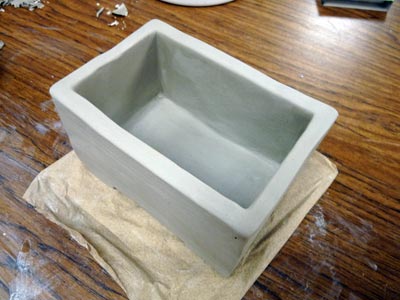
Smooth all sides inside the box. Use a wet brush if you cannot reach it with your hand.
Now it is ready for decorating.
step 6 – decorating
glazing