
CHIAROSCURO presentation


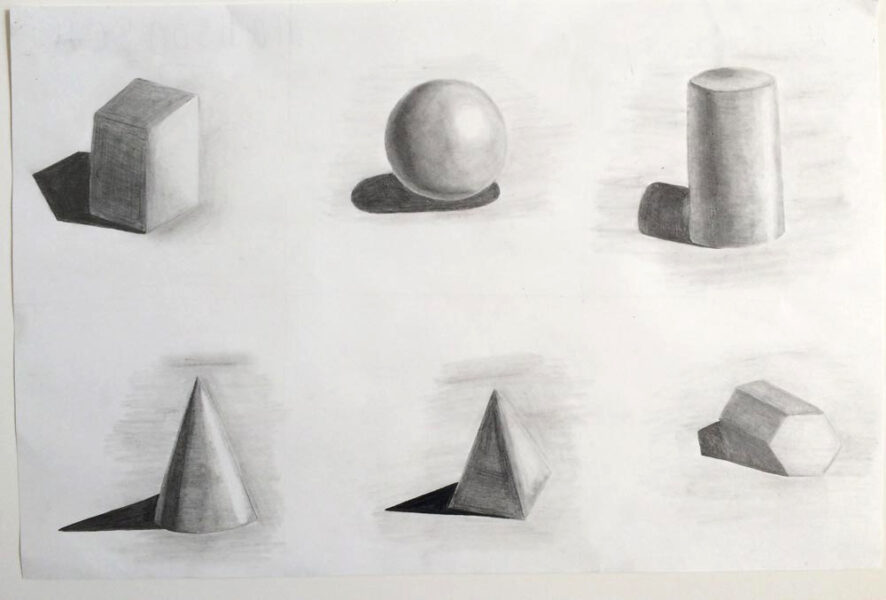
It is very important to understand the construction process of basic geometric forms and chiaroscuro shading pattern application.
Chiaroscuro is a method for applying value to a two-dimensional piece of artwork to create the illusion of a three-dimensional solid form.
This way of working was devised during the Italian Renaissance and was used by artists such as Leonardo da Vinci and Raphael.
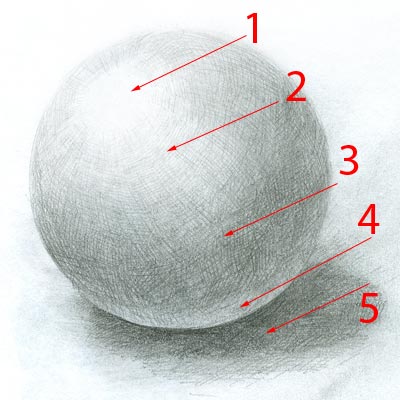
1. Highlight is the lightest value of an object. This is where direct light hits the surface.
2. Light – as the surface curves, it does not get as much light, so value becomes slightly darker.
3. Shadow – once the surface curves away from the light source, it does not receive any direct light, but it does get some indirect light from the surroundings – that’s why it is not completely black.
4. Reflected light is light that is bounced off the surfaces (surroundings), making the value slightly lighter.
5. Cast shadow is the darkest value, but further it is from the object – lighter it gets.
paid links



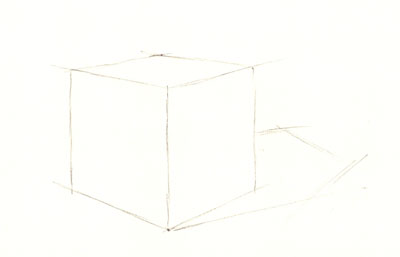
Start with the front corner line. Draw 4 receding lines going to the right and to the left. Use intuitive perspective.
Define the far corners.
To create the top side – draw two receding lines going the opposite directions.
Draw the back corners (that are hidden) – imagine that the box is made out of glass or clear plastic.
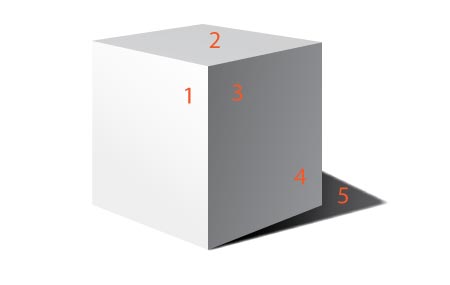
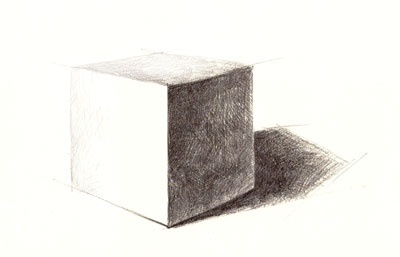
Imagine the light sours in on the left. Apply chiaroscuro pattern to shading:
1. The left side will receive the direct light. It will be the lightest value.
2. The top side will get some light – it will be slightly darker than the left.
3. The right side does not get any light from the light source. It is in a shade. This side though receives some light, reflected from the ground surface (4 – reflected light).
5. Drop shadow is the darkest value of all, especially closer to the object.
Create the biggest contrast at the closest corner.
1. highlight – leave the left side white, especially by the top corner – the area of a big contrast
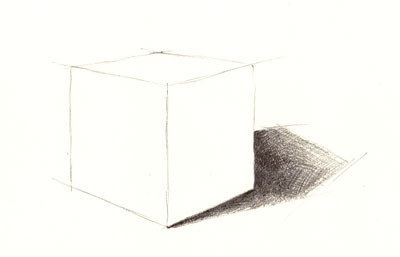
2. Light – lightly shade the top side. Incorporate the outlines into shading
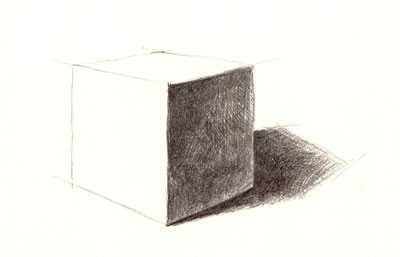
3. Shadow – shade the right side. darker by the front edge.
4. Reflection light – bottom area of the right side.
5. Drop shadow – darker by the cube, gradually fading and blurring.
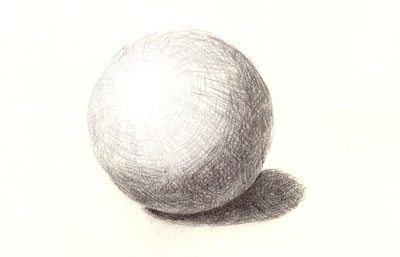
Objective: Show how light behaves on a round object using chiaroscuro.
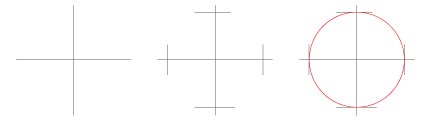
Start with a light circle. Use your wrist to make a smooth, round shape.
Lightly sketch the axis lines to help center and balance the form.
Determine the light source – typically from the upper left.
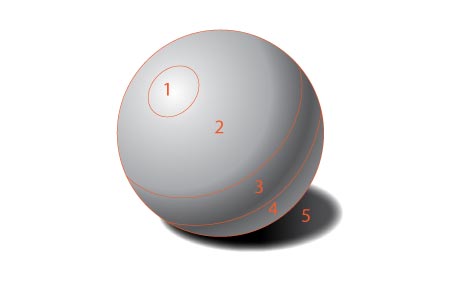
1. Highlight will be on the upper-left side, where the light hits directly.
2. Light area curves around the highlight—values gradually darken as the surface curves away.
3. Shadow starts as the form turns away from the light—place a smooth, even midtone to dark value here. Core shadow is the darkest part of the shaded area, just inside the edge of the light.
4. Reflected light appears on the lower-right edge, light bouncing up from the surface.
5. Cast shadow sits on the surface to the bottom-right of the sphere. It is darkest near the base of the sphere and softens outward.
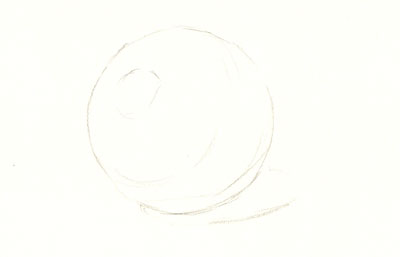
1. Highlight – mark the brightest area where the light hits directly. This is a small circular spot on the upper-left part of the sphere.
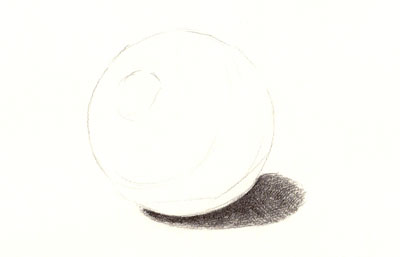
2. Light area curves around the highlight—values gradually darken as the surface curves away – add a light tonal shading.

3. Shadow – as the form curves away from the light, gradually darken the values on the lower-right side.
Add Core Shadow – the darkest curve right before the edge of the sphere (not on the edge).
4. Reflected Light – near the bottom edge of the sphere, add a lighter area within the shadow – this is light bouncing off the surface.
5. Cast Shadow – draw the shadow cast on the ground. It will start darker closest to the sphere and fade as it moves away.
Objective: Understand chiaroscuro applied to curved vertical surfaces.
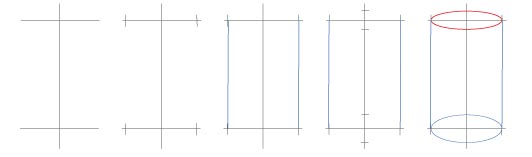
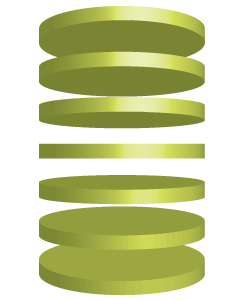 Draw a vertical cylinder.
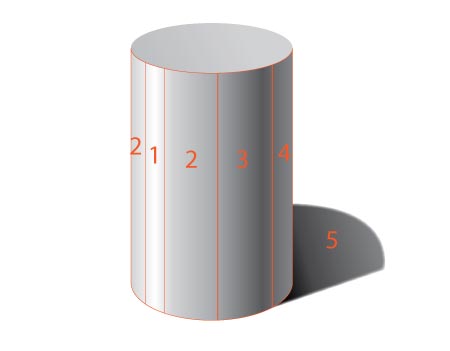
1. Highlight runs vertically along the curved surface, slightly left of center.
2. Light area gradually darkens as it curves around the form.
3. Shadow falls on the far right edge—start with a midtone and darken toward the edge.
4. Reflected light is a thin light band along the far right, inside the shadow.
5. Cast shadow stretches to the right and curves outward. It’s darkest near the base of the cylinder.

Highlight – add a narrow vertical highlight on the side closest to the light.
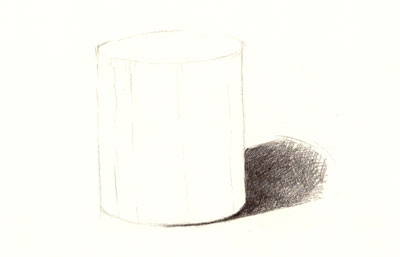
Light – lightly shade the surface around the highlight.
Use vertical and/or curved strokes to support the form.
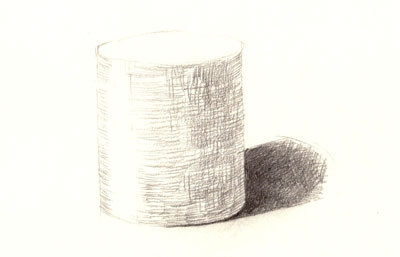
Shadow falls on the far right edge—start with a midtone and darken toward the edge.
Reflected light is a thin light band along the far right, inside the shadow.
Cast shadow stretches to the right and curves outward. It’s darkest near the base of the cylinder.
Objective: Learn to show light on a conical form.

Draw a triangle with a rounded base (ellipse). Keep the cone symmetrical. Lightly draw the axis line to keep the form centered.
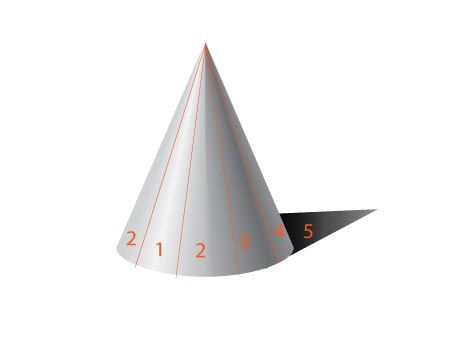
1. Highlight is slightly to the left of the center on the curved surface and is triangular.
2. Light area transitions smoothly toward the right.
. Shadow is a darker area on the right side of the cone.
4. Reflected light appears as a soft edge between the darkest shadow and the outer contour on the right.
5. Cast shadow fans out to the right side from the base of the cone—darker near the base, lighter as it spreads.
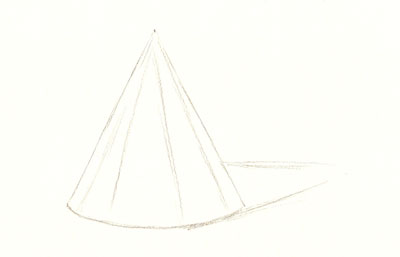
Highlight – place a small light area on the left side, curving from tip to base.
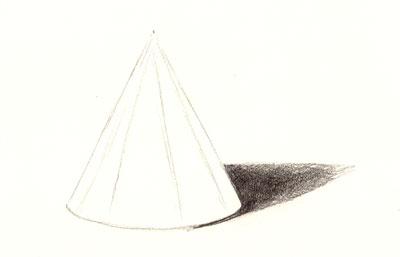
Light – softly darken away from the highlight.
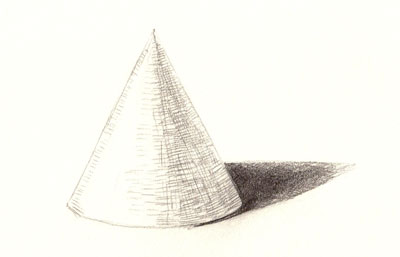
Shadow – on the right side of the cone, darken the curved surface to show it turning away.
Reflected Light – add a sliver of lighter value near the right edge of the cone base.
Cast Shadow – sketch a curved, triangular shadow on the ground to the right; darkest near the tip.
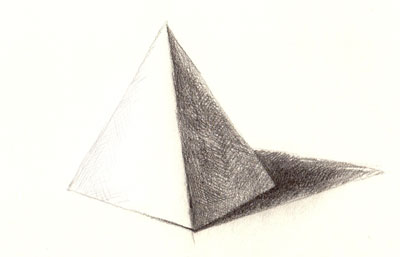
Objective: Apply chiaroscuro to angular, flat planes.
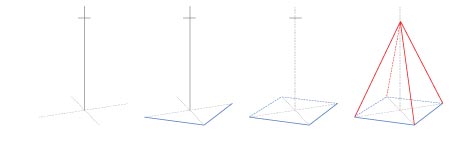
Draw a pyramid starting with two diagonal lines. Add an axis where they cross. Determine the height and the bottom sides.
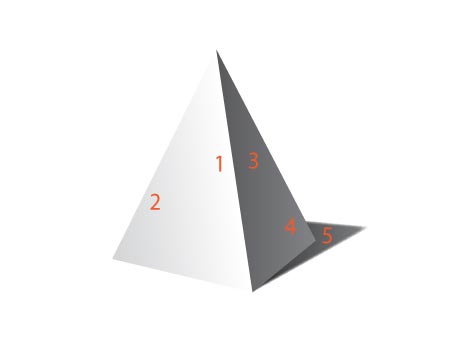
Left face receives direct light—keep this the lightest value.
Right face turns away from the light—it will be in shadow.
Reflected light can appear faintly along the edge of the right face.
Cast shadow falls to the right and slightly back.
Keep it crisp and dark near the base.
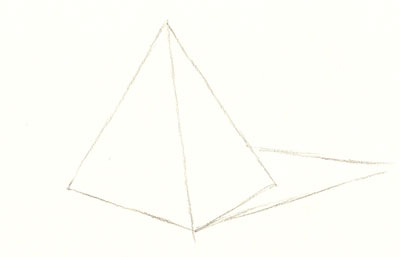
Highlight – the front plane facing the light will be the lightest.
Light – leave it nearly white with minimal shading.

Shadow – the side plane facing away from the light is much darker; shade evenly but not flat – add slight gradient to show realism
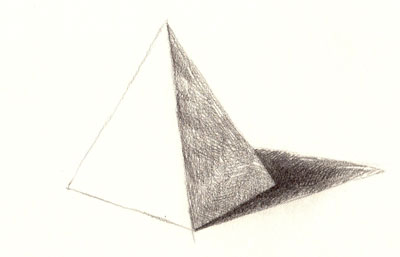
Reflected Light – along the dark side edge, subtly lighten the value to simulate light bouncing from the ground.
Cast Shadow – draw a long, sharp-edged shadow cast to the right side of the pyramid; darkest close to the base.