


Sgraffito Tile

WI State Standards:
- AA Cr10h
Investigate: Engage in critical thinking, problem solving, and research through elements and principles of art and design studio practices and processes.
(aesthetics / problem solving) - AA Cr11h
Plan: Formulate original concepts by practice, experimentation, and revision. (planning/experimentation) - AA Cr12h
Make: Create works of art that introduce students to media, care of tools, and basic craftsmanship skills.
(skills)
Learning objectives
- creative project: planning and executing
- conditioning clay
- following the process
- sgraffito technique
- glazing
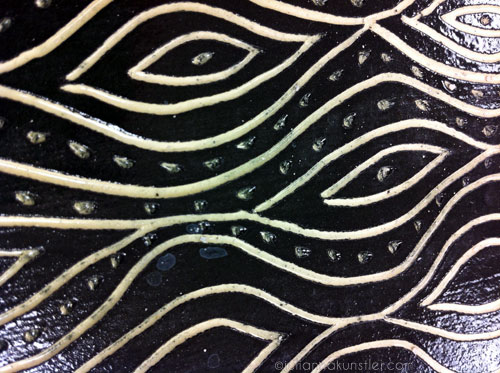
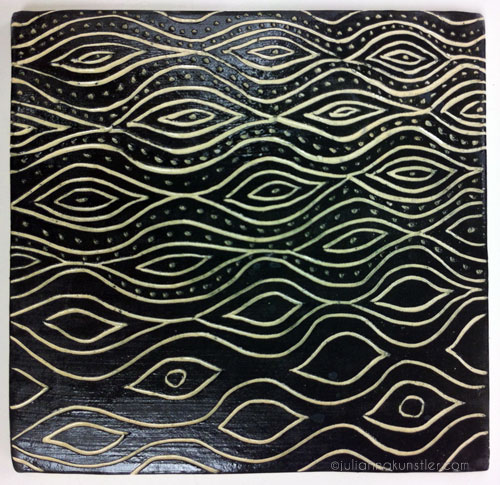
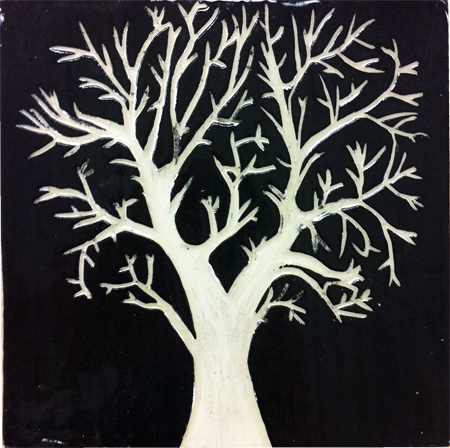
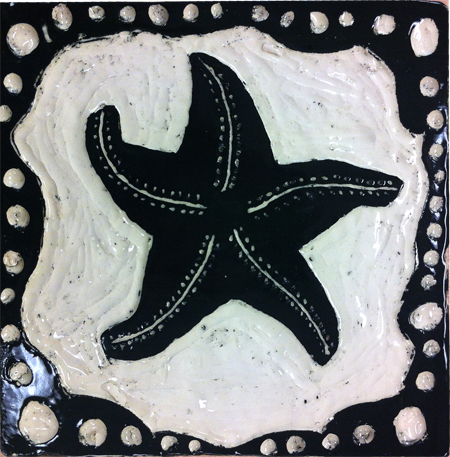
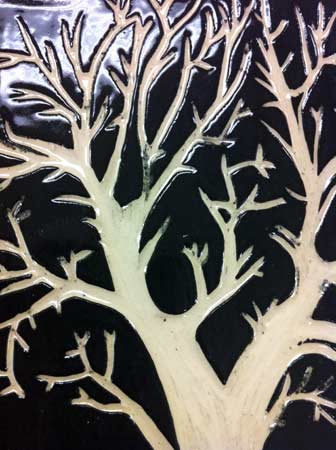
Sgraffito is a decorative technique in ceramics where a layer of colored slip is applied to the surface of leather-hard clay, and then parts of the slip are carefully scratched or carved away to reveal the clay body underneath. This creates a strong contrast between the slip color and the natural clay, allowing for detailed designs, textures, and patterns. It is one of the oldest surface decoration methods and gives artists a way to draw or carve directly into the clay.
examples:
Prepare your tile
Roll and cut a clay slab into a square or rectangle, about ½ inch thick.
Let it firm up to a leather-hard stage (sturdy, but still slightly moist).
Apply the slip
Brush or pour a smooth, even layer of colored slip over the surface of the tile.
Cover the entire surface or just the areas you want to decorate.
Let the slip set up until it’s no longer shiny but not completely dry.
Plan your design
Lightly sketch your design into the slip using a pencil or needle tool.
Keep the design bold and clear for strong contrast.
Carve the design
Use a sgraffito tool, needle tool, or loop tool to carefully scratch away the slip.
Reveal the clay body beneath, creating lines, patterns, and textures.
Vary the depth and width of your lines for interest.
Clean the surface
Use a soft brush or lightly damp sponge to remove slip crumbs without smearing your design.
Finishing
Allow the tile to dry slowly and evenly.
Once bisque fired, you can leave the piece as is, or add a clear glaze to enhance the contrast.