


Sculptural Pinch Pot

WI State Standards:
- AA Cr10h
Investigate: Engage in critical thinking, problem solving, and research through elements and principles of art and design studio practices and processes.
(aesthetics / problem solving) - AA Cr11h
Plan: Formulate original concepts by practice, experimentation, and revision. (planning/experimentation) - AA Cr12h
Make: Create works of art that introduce students to media, care of tools, and basic craftsmanship skills.
(skills)
Learning objectives
- creative project: planning and executing
- conditioning clay
- following the process
- adding sculptural elements
- glazing
Assignment:
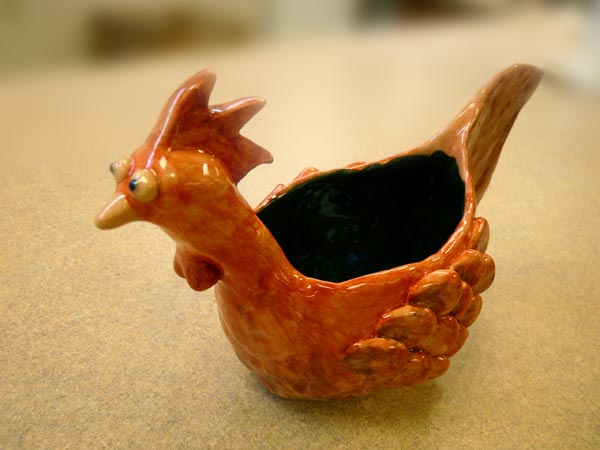
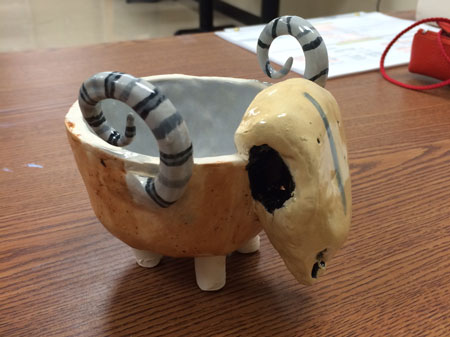
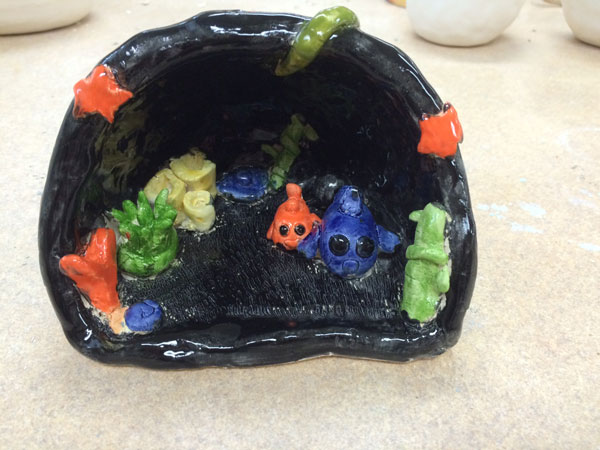
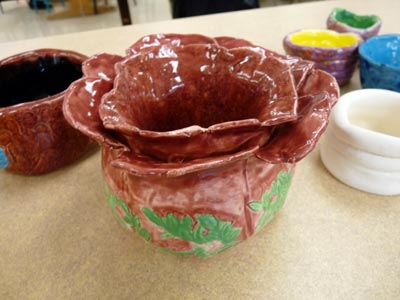
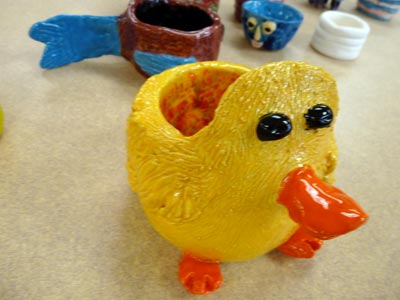
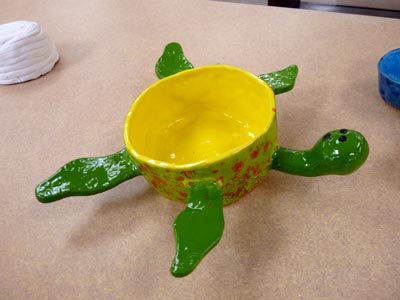
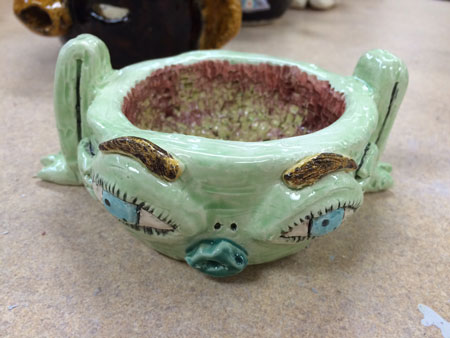
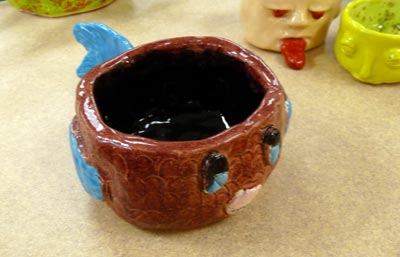
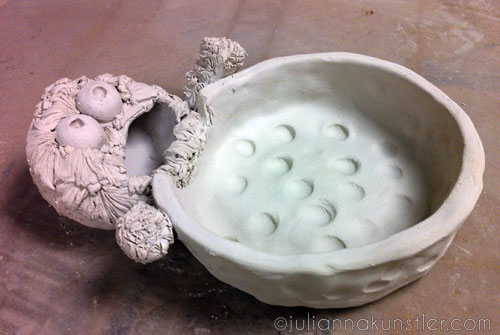
Create a pinch bowl no smaller that the size of your open hand.
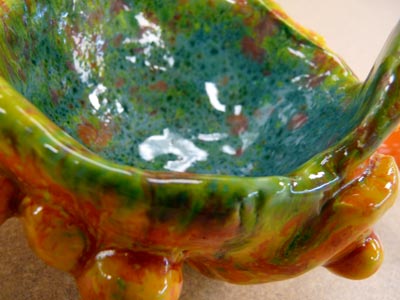
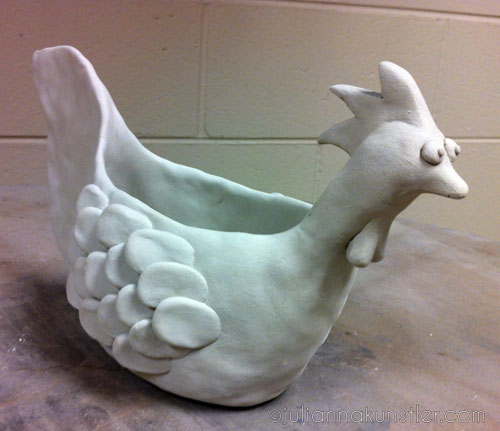
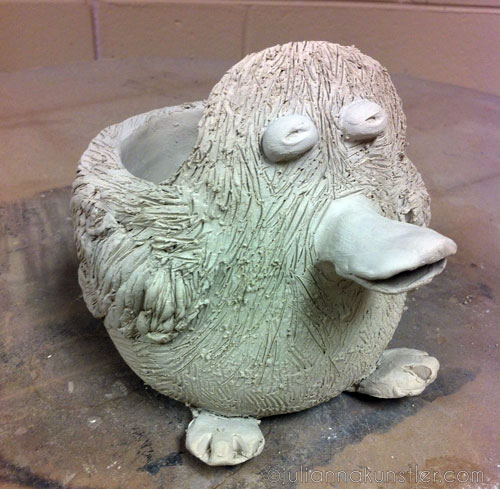
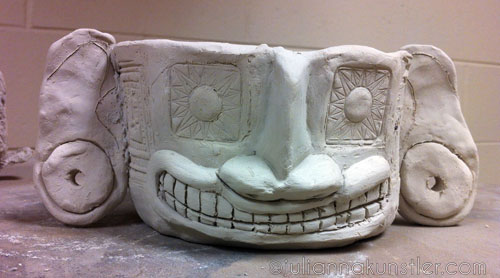
Remember to rotate the bowl to keep the wall thickness consistent. Once the bowl is done – add sculptural elements (think: animals, plants) and textural elements (imprints, scratching, texturizing…).
examples:



STEPS
Forming the Bowl
Start with a ball of clay about the size of your fist.
Press your thumb into the center to create an opening.
Slowly pinch the walls outward, turning the bowl in your hand as you go.
Keep the wall thickness even by rotating often and pinching gently.
The finished bowl should be at least as large as your open hand.:
Adding Sculptural Elements:
Think creatively—animals, plants, faces, or abstract forms can all work.
Roll or shape small pieces of clay for these elements.
Always score and slip both surfaces before attaching to make sure they stay secure.
Adding Texture:
Experiment with imprints, scratching, or tools to create surface textures.
Use a variety of marks to give your piece personality and visual interest.
Leave some areas smooth to contrast with the textured parts.
Refining the Form:
Once your pot is leather hard (firm but still workable), clean it up.
Use a damp sponge or a soft wet brush to smooth surfaces—avoid over-wetting the clay.
Do not smooth over textured areas; keep them crisp and defined.
Finishing Touches:
Double-check all attachments and edges.
Make sure the base is flat and stable so the pot won’t wobble.
Add any final details before letting the piece dry completely.
Reminder: Creativity is key—your pinch pot should be both a functional bowl and a small sculpture that shows your personal style.
After bisque firing:
Glaze the inside of the bowl. first. Three even layers.
Then glaze the outside with multiple colors. Important: Do not leave any unglazed areas as they will look bad after firing.
You DO NOT GLAZE the BOOTOM of the bowl! If you accidentally got some glaze on the bottom side – wipe it off with a wet sponge. You do not want your art piece to stick to the bottom of the kiln, right? And, by the way, ruining the kiln too…