
BALANCE principle


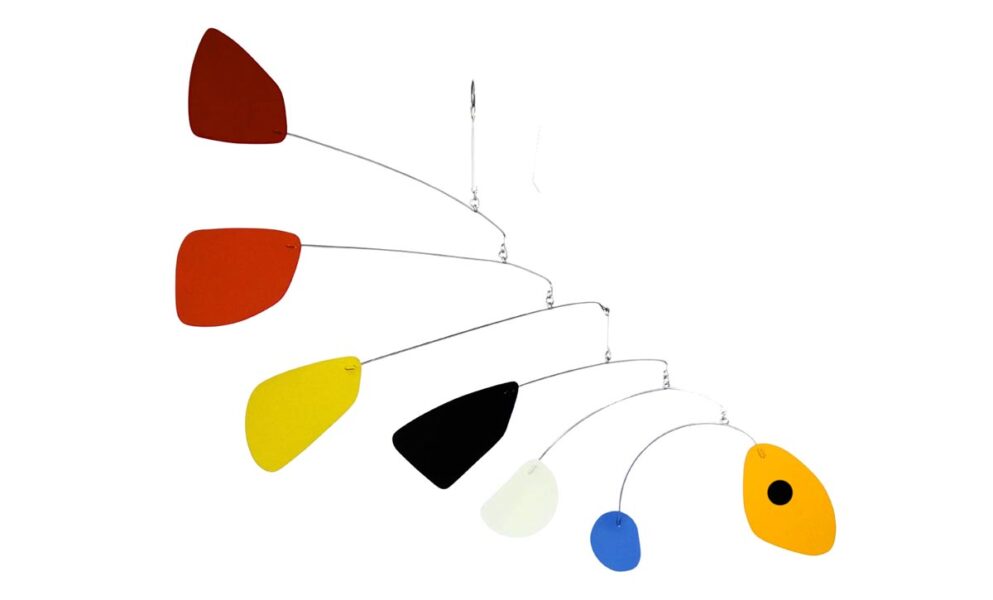
Sculpture does not have to stand still.
In this project, you will explore kinetic art, a form of art that incorporates real or apparent movement. You will design and construct a hanging mobile made from lightweight shapes suspended from wire.
Your challenge is to create a sculpture that is visually interesting and physically balanced.
As you work, you will experiment with weight, position, gravity, movement, color, shape, positive and negative space, and balance.
Kinetic art is art that depends on movement for part of its effect.
Movement may be produced by:
Unlike a traditional sculpture that remains in one position, a kinetic sculpture can continually change. As the parts move, the relationships between shapes, colors, shadows, and spaces change as well.
A mobile is a type of kinetic sculpture made from suspended elements that are carefully balanced so they can move freely.


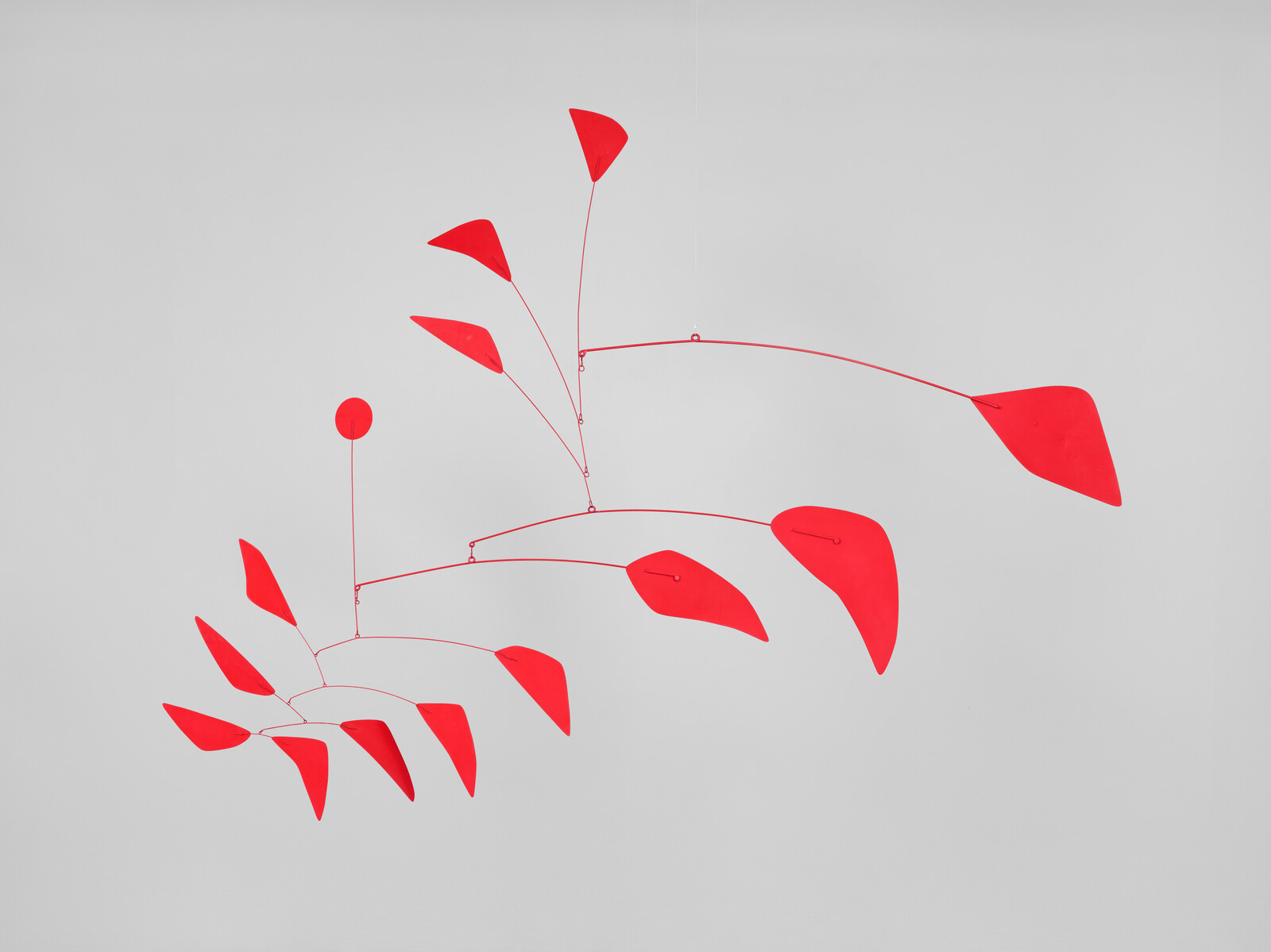

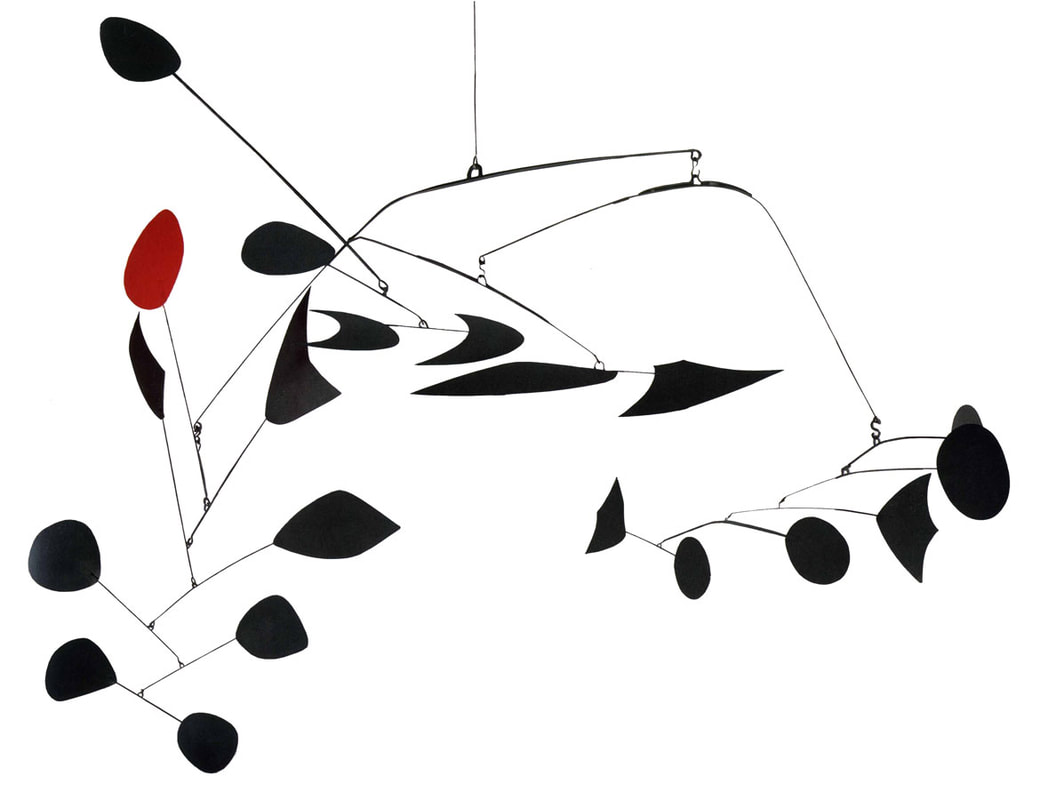
American artist Alexander Calder became famous for transforming sculpture into something that could move.
Instead of creating heavy sculptures sitting firmly on a pedestal, Calder used wire, metal shapes, color, and carefully positioned weights to create sculptures that responded to the surrounding air.
His suspended sculptures became known as mobiles.
Calder’s work demonstrates that sculpture can involve not only form and space, but also time and movement.

Balance is the distribution of visual weight within a composition.
In this project, balance has TWO meanings.
Visual Balance
Consider how the shapes, colors, sizes, and empty spaces work together.
Physical Balance
Your sculpture must also actually balance.
A large shape may need to hang closer to the suspension point, while a smaller shape may need to be farther away.Think of each wire section as a tiny seesaw.
Weight + distance = balance.
You will probably need to slide, shorten, lengthen, trim, or reposition pieces several times before your mobile balances correctly.
That experimentation is part of the project.
Design and construct an original hanging mobile using paper/cardstock, wire, and thread or fishing line.
Your mobile should include:
Your mobile should move freely without collapsing, tangling excessively, or leaning heavily to one side.
Do a research. See what other artists have created.
What makes their mobiles interesting?
How did they handle shapes, forms, and colors?
Create several thumbnail sketches for possible mobile designs.
Consider:
Shape: Geometric? Organic? Abstract? A combination?
Color: Complementary? Analogous? Monochromatic? High contrast?
Repetition: Will certain shapes or colors repeat throughout the sculpture?
Variety: How will you prevent the design from becoming predictable?
Movement: How will the shapes interact as the mobile rotates?
Do not design only the front. Your sculpture will be viewed in the round.
Cut your shapes from cardstock and colored paper.
Experiment with:
Remember that empty space is part of the composition.
A hole cut into a shape creates negative space, and the spaces between suspended elements become part of the sculpture.
Begin with the lowest section of your mobile.
Attach shapes to a piece of wire using thread or fishing line.
Find the point where that section balances.
Once it is balanced, suspend that entire section from another wire.
Continue building from the bottom upward.
Each completed section becomes a new weight that must be balanced against another element.
Do not permanently attach everything immediately.
Then secure your connections.
Hang your mobile where it can move freely.
Gently introduce air movement and observe it.
Look at it from several directions.
Ask yourself:
Make adjustments until the sculpture feels balanced both physically and visually.
After completing your sculpture, answer:
Your project will be evaluated on:
Design & Composition
Shapes, colors, positive/negative space, repetition, variety, and overall visual organization.
Balance
Successful use of both visual and physical balance.
Movement
The sculpture moves freely and movement contributes to the design.
Craftsmanship
Wire connections, suspended elements, cuts, attachments, and finishing are neat and secure.
Experimentation & Problem Solving
Evidence of testing, adjusting, and refining the structure.
Creativity
The final mobile demonstrates original choices rather than simply copying an existing Calder sculpture.