
Colored Pencils Techniques


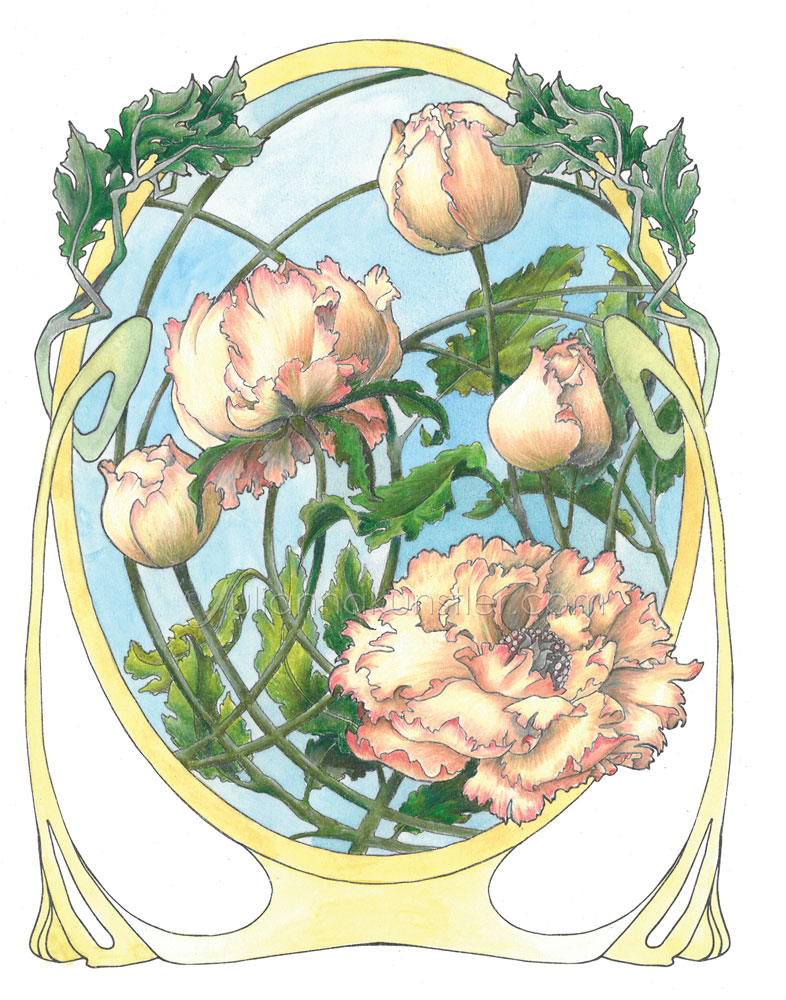
Colored pencils are an excellent art medium for coloring.
Good-quality colored pencils are even better (My favorite is Prismacolor).
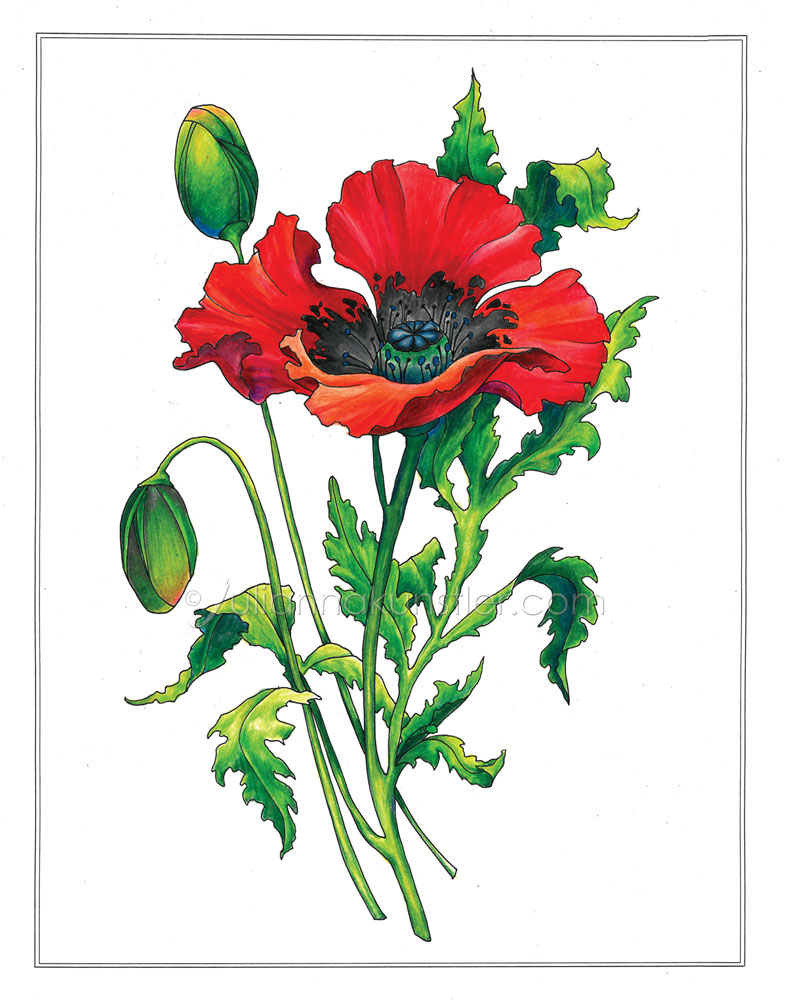
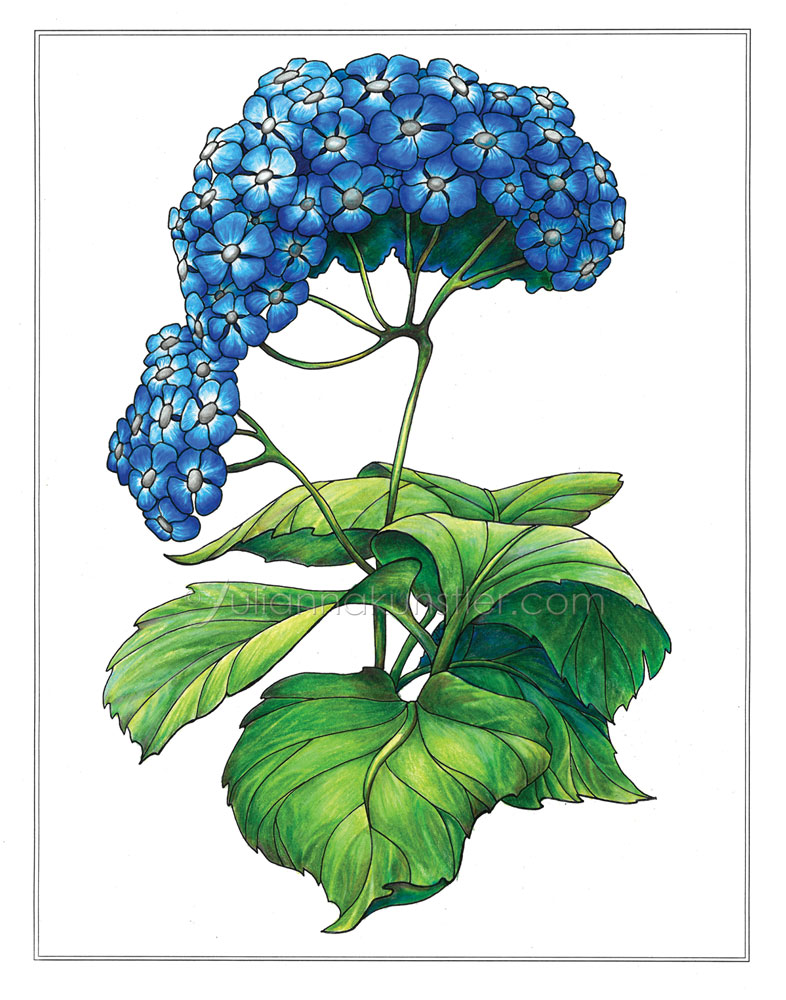
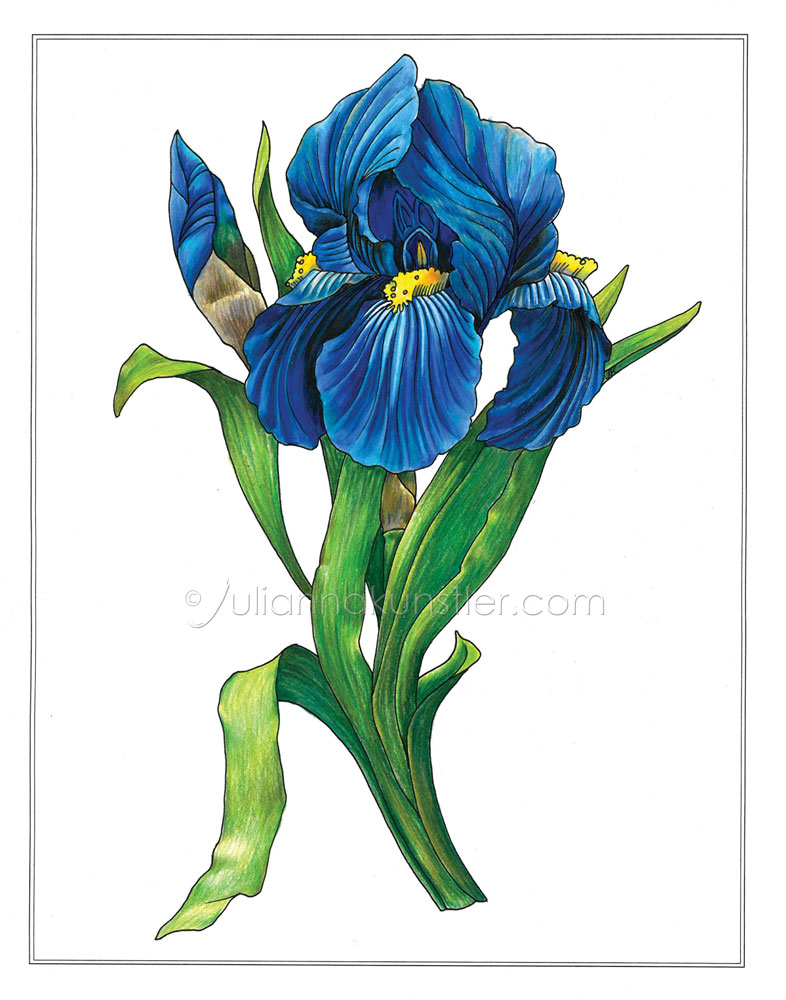
A good starting point to practice colored pencils techniques is by using coloring books and coloring art prints.
Try to blend at least two colors (or two shades of a color) inside each shape.
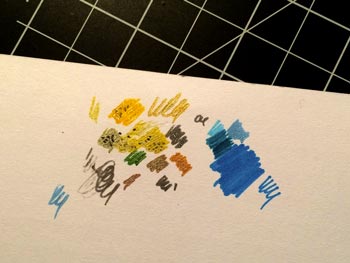
scrap paper
Use to test colors and color combinations, blending techniques, etc.
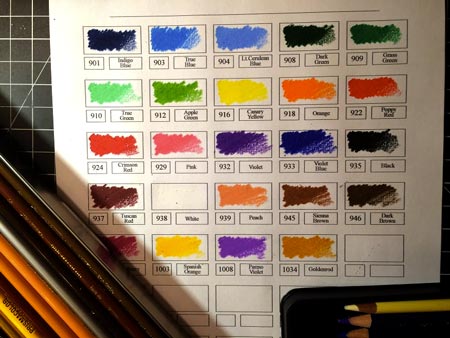
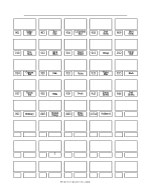
color chart
Make a color chart of your pencils before you start, especially if these are new pencils… Very often the colors look slightly different on the outside.
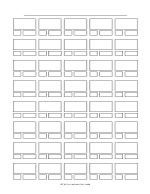
Use any of the charts below.
Writing down the name of the color and its number will help you tracking your pencils inventory and make it easier to reorder them.

If you are a complete beginner – follow the steps below. Otherwise, move to the next tip.
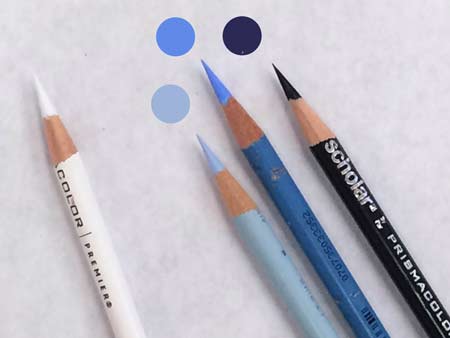
Once you chose a main color (medium blue) – you need to find two more pencils:
White pencil is always helpful to lighten areas, blend light colors, fix mistakes, etc.
IMPORTANT:
Sharpen the pencils before work. Continue sharpening them as you work on your assignment.
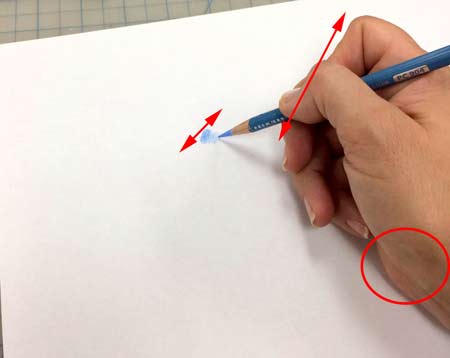
Practice shading with small strokes.
Your wrist should rest on the table, don’t move it as you shade – move only the pencil – this way your strokes are tight and they are small. Reposition the wrist, then apply a new set of strokes – they can overlap, can be placed at different angles, or you can rotate the worksheet itself – whatever is more comfortable for you.
IMPORTANT:
Strokes should be small – this way it is easier to control you shading.
Try shading while changing the pressure that you apply to your pencil – from full coverage (full strength) to fading.

If you move your wrist while shading – the strokes will become longer and sketchy – this is not the result we want for this particular assignment.

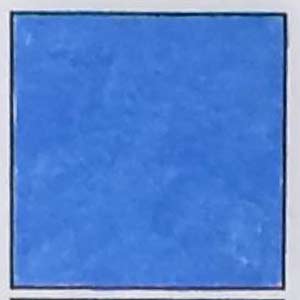
Stay inside the square.
No strokes and none of paper should be visible – solid, full strength coloring with small strokes.
Overlap strokes, make sure they fill in the entire area.
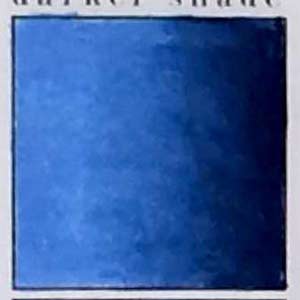
Use two pencils: medium color and the darker shade.
Follow the steps below.
Transition should be smooth, without a define border between the colors.
See the steps below:
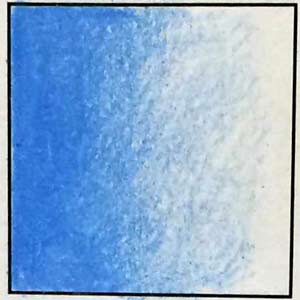
Shade the square with the main color:
Start on the left with the full strength, lightening the pressure towards the middle, then completely fading.

Starting from the right – shade with the dark color – full strength on the right, fading towards the left side.
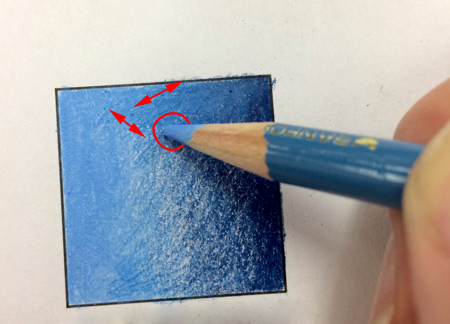
Use the first (main) color for blending.
Use small strokes in all directions, or use circular strokes.
IMPORTANT:
Always use the lighter color for blending.
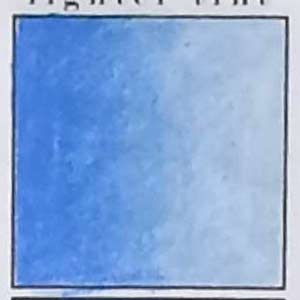
Repeat the steps above with the main color and the lighter color.
Use the lighter color for blending.
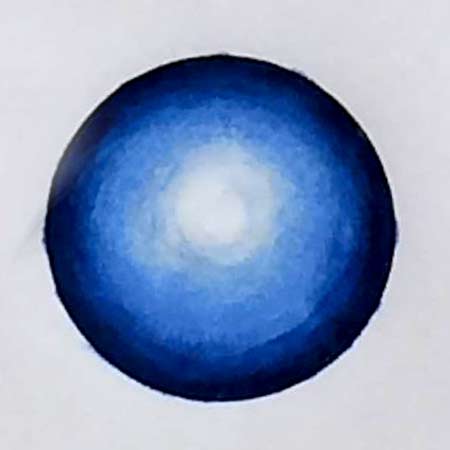
Create a 3-D shading (coloring) using all three pencils (main color + dark + light).
You can use WHITE pencil in the center for blending.
Strokes should follow the form.
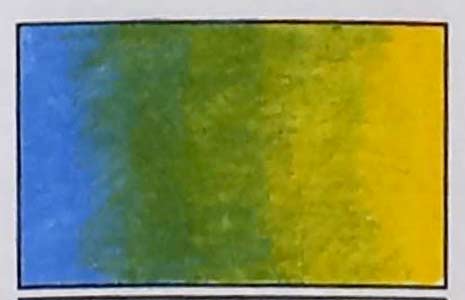
Create a smooth transition from one color to another.
Remember to use the lighter color for mixing and blending.
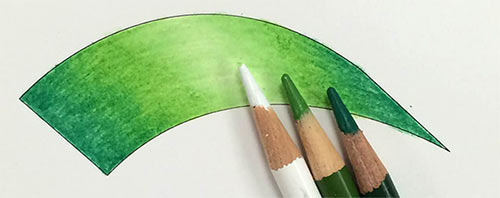
Pick a dominant color – in this case it’s medium green.
Prepare at least 3 pencils: WHITE, MEDIUM GREEN, and DARK GREEN. If you chose a different dominant color – use the formula:
White + Dominant color + Darker version of the main color

step 1
Start with a Medium Green. Shade lightly most of the surface.
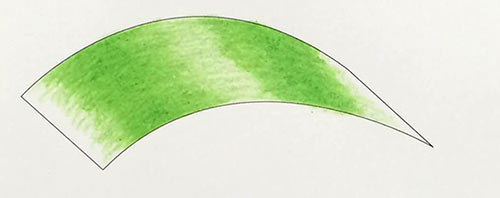
step 2
Go over with the same Medium Green pencil and color more intensely, leaving the middle as is.
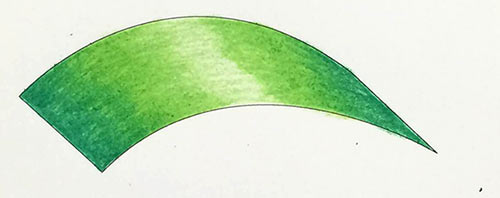
step 3
Use Dark Green and color in the sides of the shape, use Medium Green again to blend the two colors. Always use the lighter colors of the to for blending.

step 4
Use White pencil to blend the middle part – the lightest area.
