


Collage
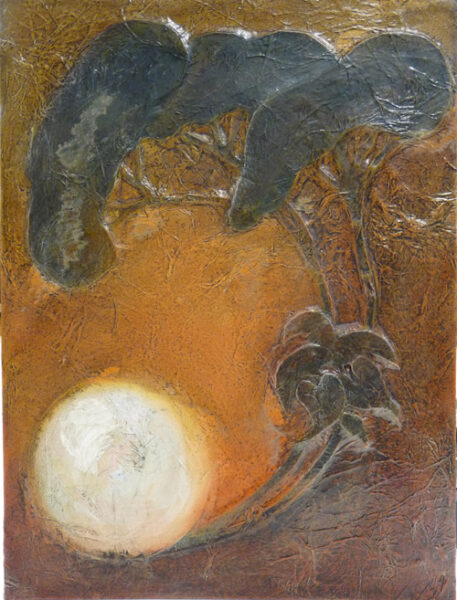
lamination technique
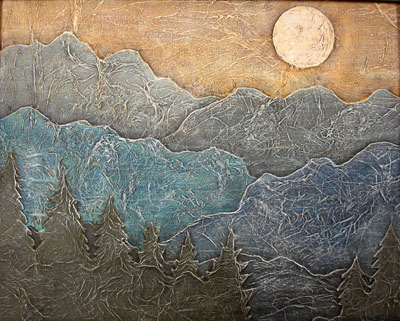
Objectives: Students learn about new collage techniques: layering, staining, and dry brush.
Essential questions:
1. What are the steps you take to create a collage?
2. How does staining change a color?
3. Why do you use dry brush technique?
Lamination – is the technique of building up surfaces in multiple layers to achieve a certain texture, look, feel, etc.
WI State Standards:
- AA Cr11h
Plan: Formulate original concepts by practice, experimentation, and revision. (planning/experimentation) - AA Cr12h
Make: Create works of art that introduce students to media, care of tools, and basic craftsmanship skills.
(skills) - AA Pr10h
Develop Meaning: Curate a body of work incorporating personal, historical and contemporary art to communicate one or more points of view.
(aesthetics / communication)
Learning targets:
- Use planning (sketching) to develop a unique outcome
- Create an original artwork
- Combine multiple media to achieve an aesthetic effect
- Learn about mandala art form
- Create a mandala and make it personal
- Use shape contrast: organic shapes vs. geometric shapes
- Line stylizing
- Image transfer
- Composition balance: circular design
- Exercise and demonstrate use and mastery of the elements of art
- Exercise and demonstrate use and mastery of colored pencil drawing and shading techniques
- mixed media color application:
- colored pencils
- watercolor pencils
- watercolor
- concentrated watercolors and salt
- optional: gel pens
in a nutshell
1. Standard AA Cr11h (planning/experimentation): Research and prep work.
2. Standards AA Cr12h (skills): Drawing, cutting, laminating, painting
3. AAPr10h (aesthetics/communication): complexity, craftsmanship and the message of the artwork.
examples

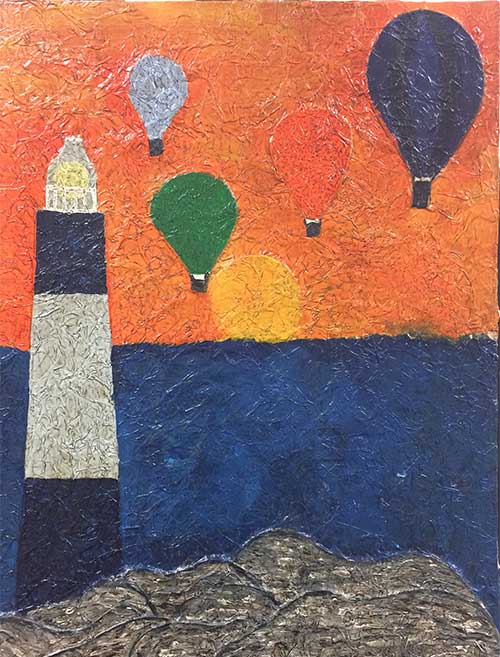

STEPS
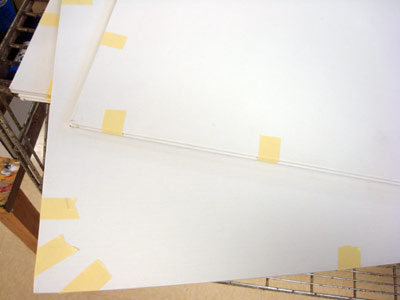
1. Glue 2 canvas boards together back to back (to prevent warping). Use pieces of masking tape to hold the canvases together while they are drying.
Sketch an image.
Landscapes and organic shapes (flowers, etc.) work the best for this technique. Use simple shapes.
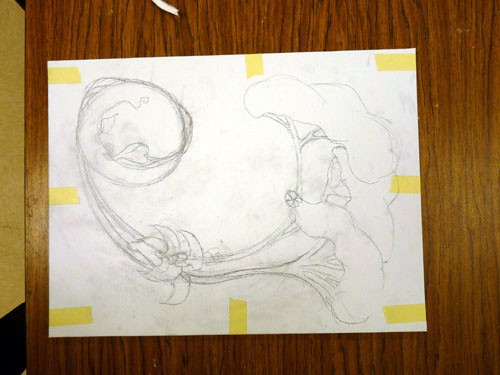
2. Draw a design on canvas.
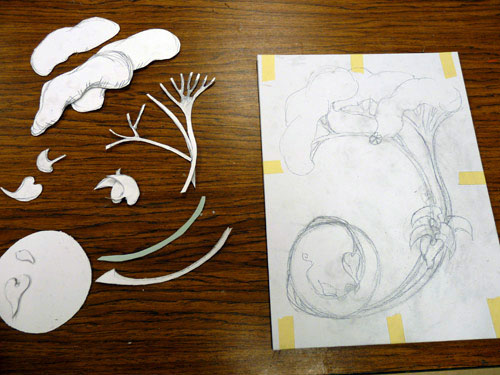
Redraw all shapes on a single thickness illustration board, cut them out.
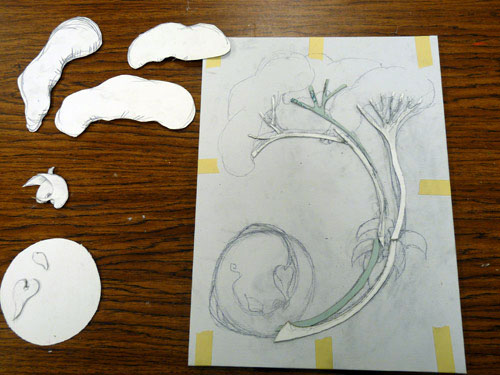
3. Glue the shapes. Start with the background, then mid-ground, and, finally, the foreground.
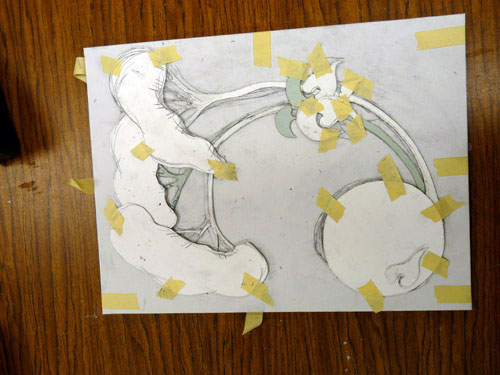
Tape the shapes to secure them as they dry.
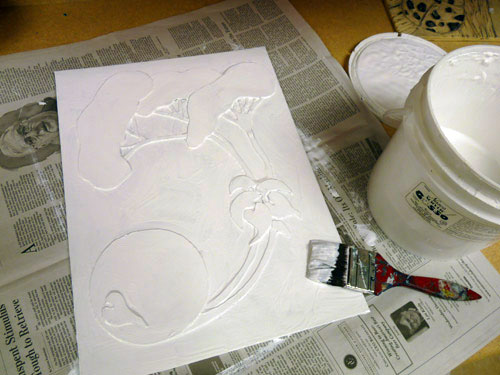
4. Cover the entire surface with gesso to seal the shapes
Gesso is an art supply used as surface preparation or primer for painting, gilding, and sculpting. Its origins are uncertain, but gesso is believed to have been developed in Italy, since the word gesso is Italian for ‘chalk’. Preparation varies according to intended use, but usually consists of mixing glue with plaster, chalk, or gypsum.
Gesso resembles paint, but is thinner and dries hard. Gesso is applied with a brush and must dry before the surface can be painted. It was first created for use in painting, in order to give the surface the right properties to receive paint. In Gothic and Renaissance panel painting, gesso was applied over a panel of wood in order to give the paint something to adhere to. It created a slightly rough surface and prevented the paint from seeping into the wood.
lamination
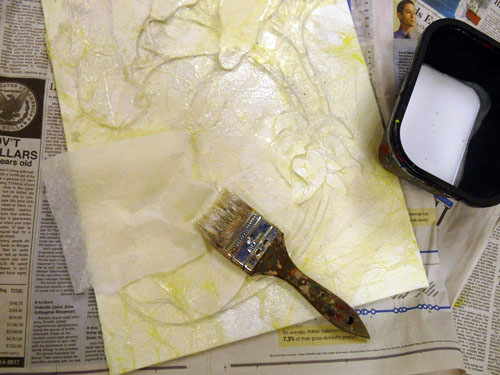
5. Glue tissue paper over the entire surface creating wrinkles and texture.
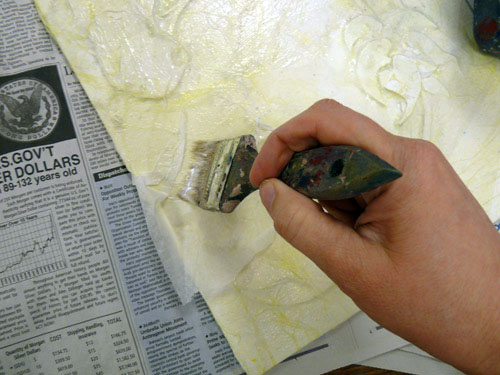
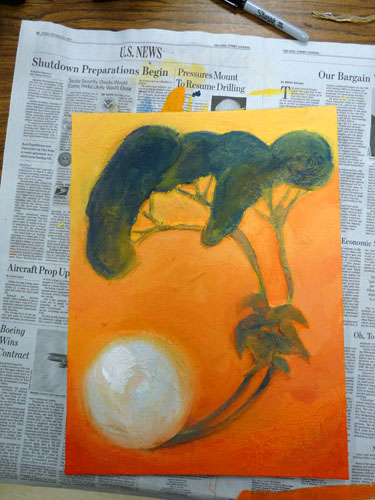
6. Let it dry completely.
7. Paint with bright colors (acrylics)
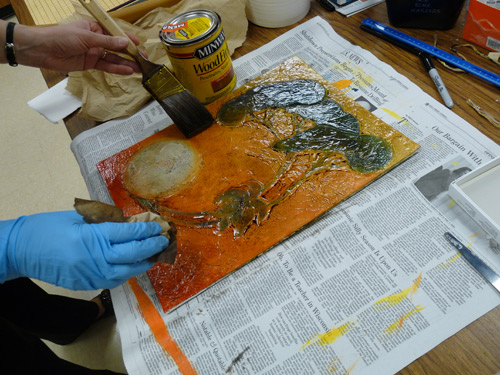
8. Stain the project (use wood stain). Wipe off the excess varnish.
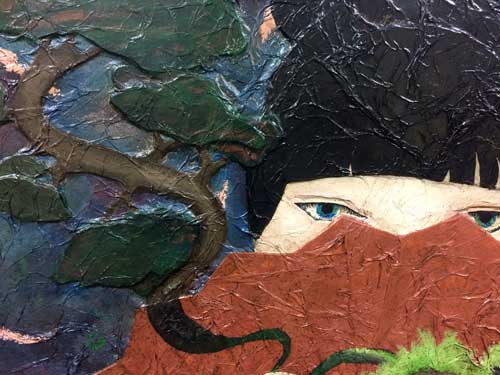
You can control the amount of woodstain on the surface. Some area can be more "textured" than others.
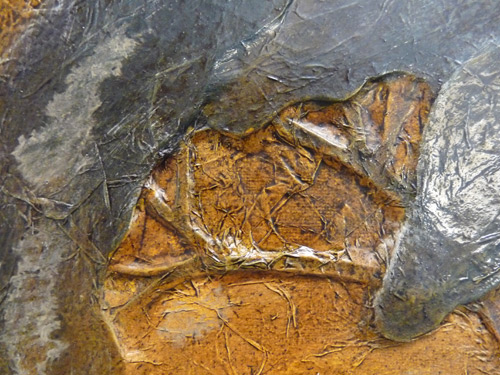

9. Use dry brush technique with a light color paint to define the texture
| standard | no evidence | beginning | emerging | proficient | advanced |
|---|---|---|---|---|---|
|
Cr.11 planning / experimentation |
Assignment does not show enough evidence or is missing |
No evidence of careful planning. Reference images we not carefully selected |
Reference images were properly selected Tracing and transferring process was not accurate Does not demonstrate effort and attention to details. Line stylizing is limited |
Artwork demonstrates accurate planning, effort, attention to details. Tracing and transferring process was accurate Student practiced line stylizing and coloring techniques |
Student displayed an outstanding effort in regards to application and understanding of the content. Artwork shows individual style, careful planning, multiple revisions and attention to details. Design is intricate and creative |
|
Cr.12 skills |
Assignment does not show enough evidence or is missing |
Student somewhat followed the process. Some steps are skipped or incomplete. Work requires major improvement. |
Student mostly followed the process. Work shows some skills and basic/partial understanding of the process. Designs are colored with multiple media |
Student followed the process exactly as the instructions specified. Work shows proper use of skills and techniques Every coloring and drawing step is carefully performed Shape alignment Lines are solid and stylized Coloring steps and coloring quality fit the requirements |
Student followed the process exactly as the instructions specified and, in addition, the piece exhibits evidence of creative experimentation beyond the required task. Coloring skills show additional effort and creativity Craftsmanship and attention to details are flawless; |
|
Pr.10h aesthetics / communication |
Assignment does not show enough evidence or is missing |
The artwork communicates little effort and personal emotional involvement in the process.
|
Student tried using elements and principles of art to solve the aesthetic task. Design is simple Some areas need improvement. |
Artwork shows individuality and effort. Design details are complex, shapes are intricate The artwork displays a clear meaning and style of the assignment. Negative space is filled with patterns The center design communicates about artist’s personality |
Student went above and beyond in the use of Art Elements and Principles to convey a clear message, showed understanding of the task, and solved the task in the most creative way. Artwork shows individuality and emotion involvement. |