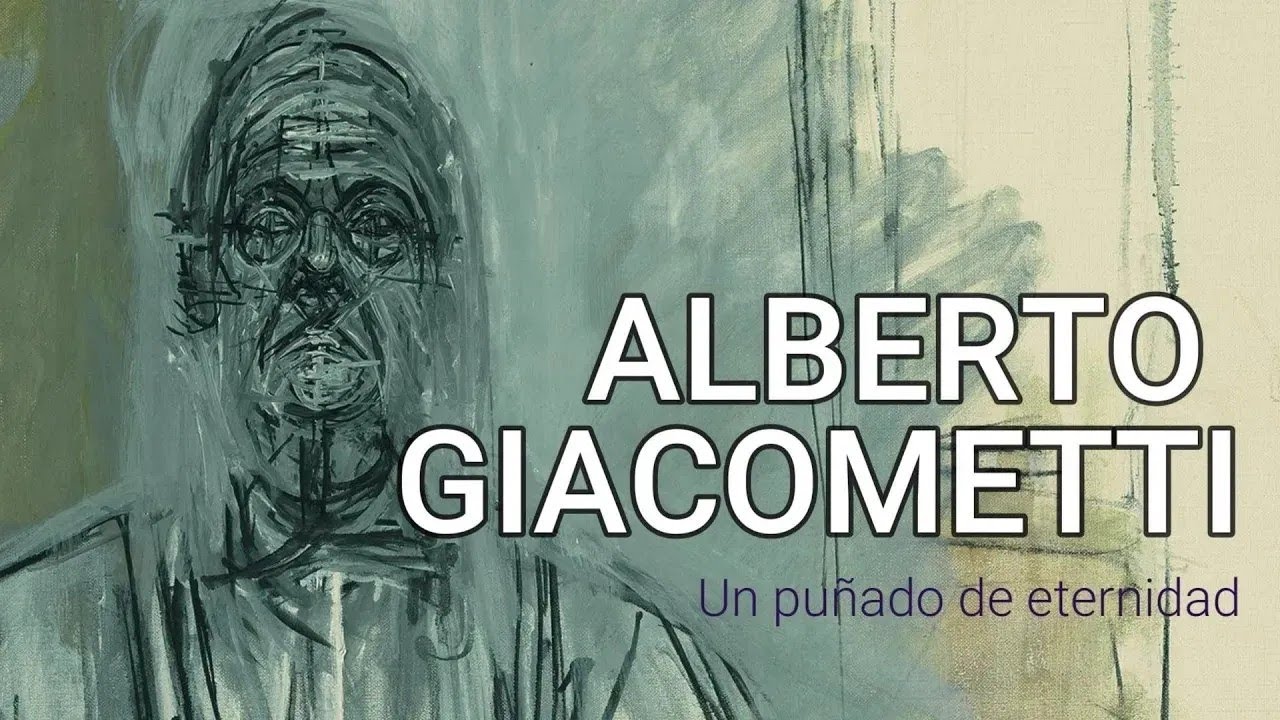
Alberto Giacometti


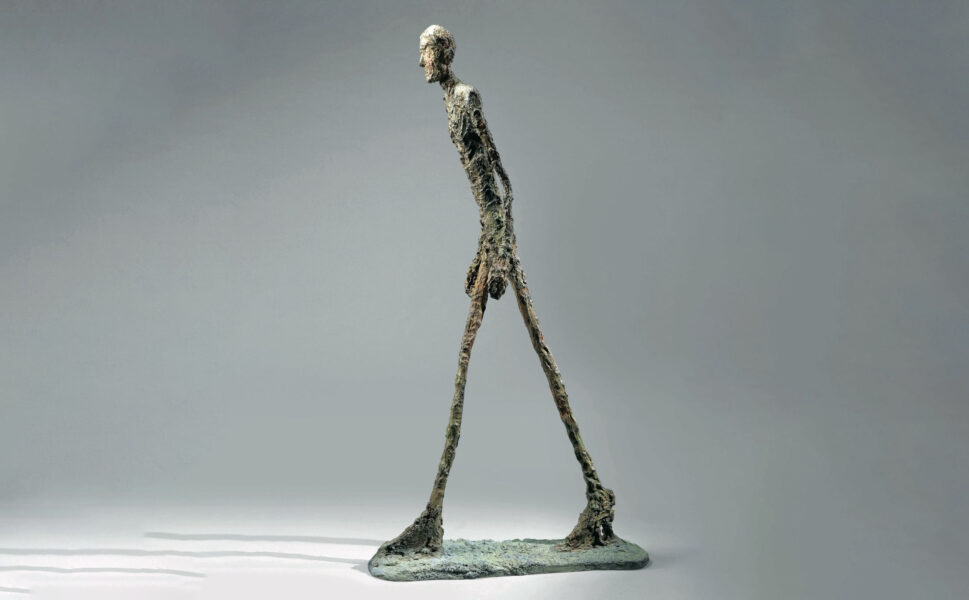
How can the position of a figure communicate movement, emotion, or personality without facial expressions or detailed features?
In this project, you will create an expressive human figure inspired by the sculptures of Alberto Giacometti.
You will begin by constructing a simple wire armature that establishes the figure’s proportions, posture, and gesture. Then you will build up the figure using aluminum foil, creating an elongated, textured human form.
Your sculpture should communicate a sense of movement, emotion, or attitude through body language.
The emphasis is not on realistic anatomy or detailed facial features. Instead, you will explore how simplified proportions, gesture, and surface texture can create an expressive sculpture.
Alberto Giacometti (1901–1966) was a Swiss sculptor known for his extremely thin, elongated human figures.
His sculptures often feature rough, heavily textured surfaces and simplified anatomical details.
Although his figures may appear fragile, they convey a powerful sense of human presence.
Many of his sculptures explore themes of isolation, movement, vulnerability, and the human condition.
Your completed wire self-portrait must include:
Suggested height: Approximately 12–18 inches, depending on available wire and base materials.

Begin by exploring how the human body communicates without words.
Sketch several simplified figures in different poses.
Experiment with walking, reaching, leaning, stretching, standing, or bending.
Focus on the overall line of action, the imaginary line that describes the main direction and energy of a pose.
Avoid complicated poses that require extensive support.
Choose a pose that communicates a specific action, emotion, or attitude.
Choose an action word before designing the figure: walking, waiting, reaching, resisting, searching, celebrating, collapsing, balancing, or hesitating.
Their challenge is to communicate that action using only the figure’s posture, without props or facial expressions.
Create a final gesture sketch.
Identify the major body parts and joints.
Pay attention to the relationships between the head, shoulders, hips, knees, and feet.
Consider which proportions you might exaggerate to create a Giacometti-inspired figure.
Elongated legs, a narrow torso, and thin arms can help create the characteristic appearance.
An armature is an internal framework that supports a sculpture.
Use wire to construct the basic skeleton of your figure.
Begin with the head, torso, arms, and legs.
Use loops and twists to connect the wire securely.
Check the proportions and pose as you work.
The armature should be strong enough to support the foil without losing its shape.
Important: Complete the pose before adding foil. It is much easier to adjust the figure while it is still just wire.
Important: Complete the pose before adding foil. It is much easier to adjust the figure while it is still just wire.
Begin wrapping aluminum foil around the wire armature.
Use small pieces of foil to gradually build the head, torso, arms, and legs.
Compress the foil firmly around the wire so it holds its shape.
Add more foil where the figure needs volume, especially around the shoulders, chest, hips, and head.
Keep the limbs relatively thin and elongated.
Avoid making the figure bulky or overly realistic.
Build gradually. You can always add more foil, but removing tightly compressed layers is difficult.
Giacometti’s sculptures are known for their rough, irregular surfaces.
Instead of smoothing every area, allow the foil to create interesting ridges, wrinkles, and variations.
Experiment with pressing, pinching, twisting, and compressing the foil.
Think about how the texture catches light and creates shadows.
Your goal is an expressive surface rather than a perfectly smooth finish.
Place your figure upright and examine it from all directions.
Does the pose communicate the intended movement or emotion?
Is the weight distributed convincingly?
Does the figure appear to be standing, walking, leaning, or reaching?
Make adjustments to the posture and proportions.
A dramatic pose still needs a stable structure.
If necessary, reinforce the legs or adjust the feet before permanently mounting the figure.
Attach the figure securely to a base.
The base should support the figure without distracting from the sculpture.
If desired, apply a thin coat of dark acrylic paint and subtle metallic highlights to suggest the appearance of aged bronze.
This finishing step is optional. The foil itself can create a beautiful metallic surface.
Check the sculpture for loose foil, exposed sharp wire, and unstable connections.
Gesture and Expression: The figure communicates movement, emotion, or attitude through body language.
Proportion and Form: The sculpture demonstrates an understanding of the human figure while intentionally exaggerating proportions.
Armature Construction: The wire framework is securely connected and supports the sculpture.
Foil Construction: Foil is carefully shaped and compressed to create intentional three-dimensional forms.
Surface Texture: The sculpture demonstrates purposeful use of rough, expressive texture.
Balance and Stability: The sculpture is structurally stable and convincingly posed.
Craftsmanship: Materials are securely attached, the form is thoughtfully refined, and sharp wire ends are addressed.
What movement, emotion, or attitude were you trying to communicate?
How did you use the pose to express your idea?
Which proportions did you exaggerate, and why?
What challenges did you encounter when constructing the wire armature?
How did the aluminum foil change the appearance of your figure?
How does the surface texture contribute to the sculpture?
How is your sculpture inspired by Giacometti’s work?
What would you change or improve if you made another figure?
