
1pt. PERSPECTIVE presentation


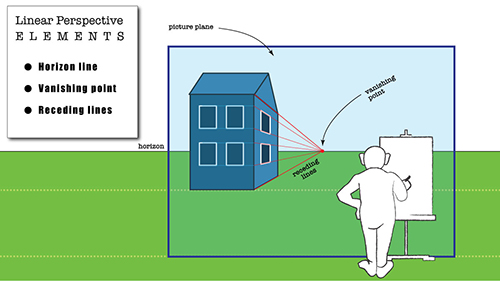
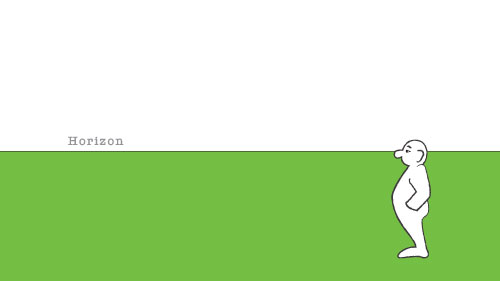
The horizon line is a line drawn across a picture.
It is essential for a picture to have a horizon line if a person wishes to communicate from what perspective a person is observing the picture (from above an object, below an object…etc).
The horizon line is always artist’s eye level.
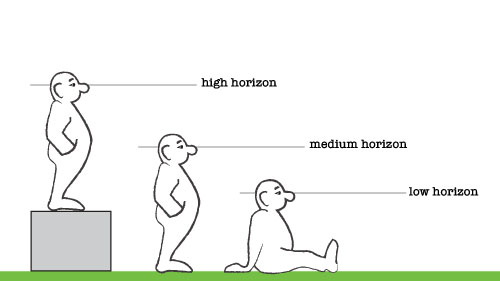
Depending on the artist’s eye level – horizons can be:
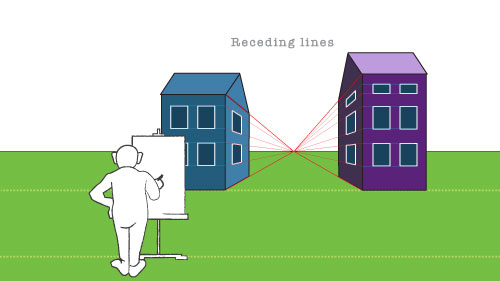
Receding lines are lines parallel to each other that gradually move away from the viewer.
All lines in nature that are parallel to each other appear to converge at the same point as they recede from the viewer.
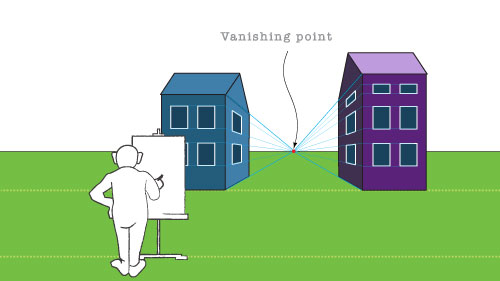
Vanishing point is an imaginary point that receding parallel lines appear to converge to.
Most of the time vanishing points are positioned on the horizon line.
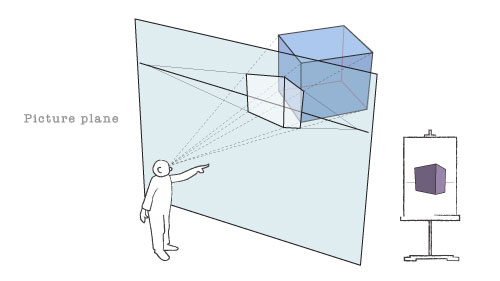
A picture plane is the two-dimensional surface upon which a painting/drawing is created.
A window can be understood as a picture plane as one looks out to the scene beyond it.
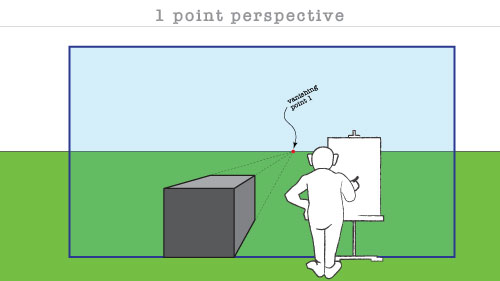
We use 1pt. perspective when the object is parallel to our picture plane.
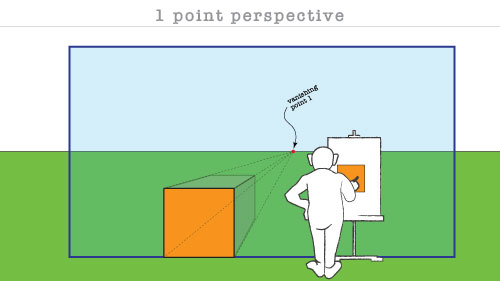
You always start drawing your object with the closest part.
The closest part of a box in 1-pt. perspective is the front side.
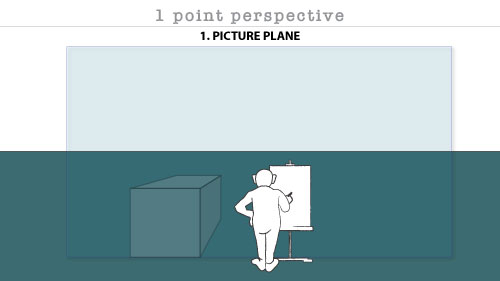
Is one of the sides parallel to your picture plane?
If yes – then 1 point perspective is your choice!
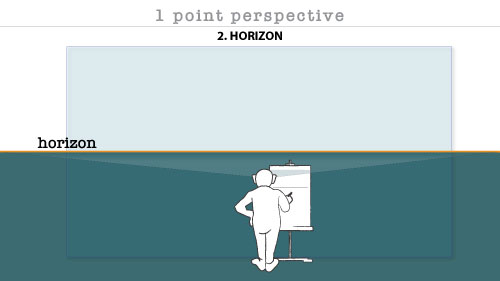
Determine where the horizon line should be
(artist’s eye level).
Draw a straight line across.
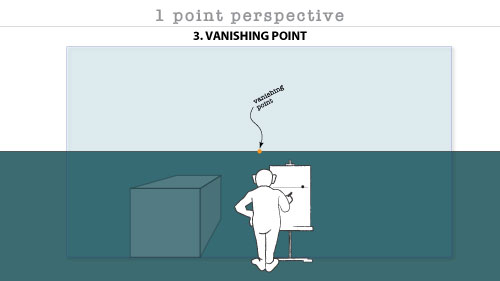
Place the vanishing point onto the horizon.

Draw the closest side that is parallel to your picture plane.
Draw it “as is” – without any distortion.
This is the side where all measurements can be done.
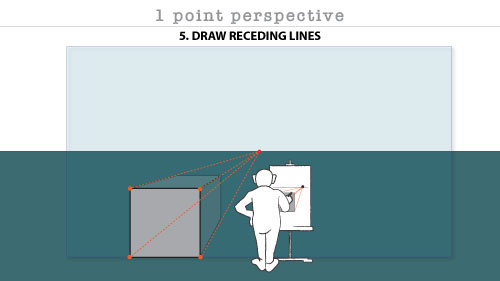
Draw the receding lines by connecting each corner to the Vanishing Point..
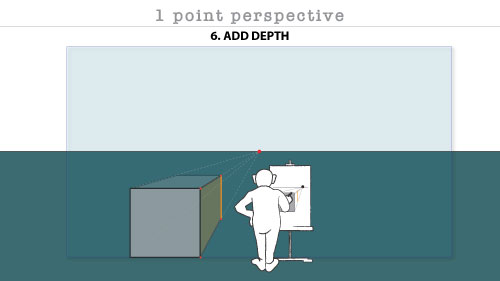
Determine the depth of the box by connecting two receding lines with a vertical line.
Make sure you connect the two receding lines that belong to the same side.
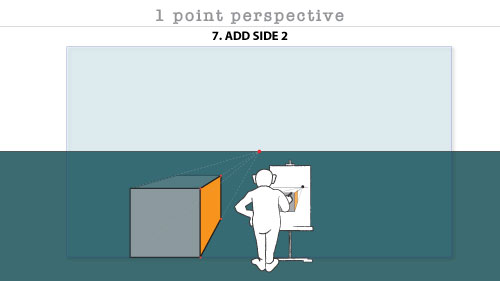
Your 2nd side is done! You can outline it now.
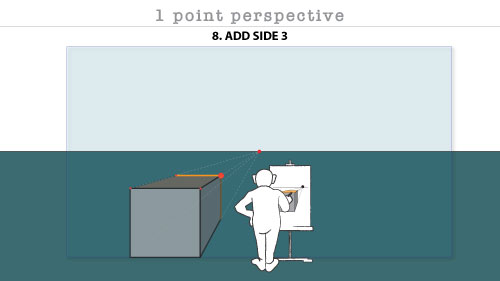
Having the depth determined for side 2, use the same corner and draw a horizontal line between two receding lines that form the top side.
All three sides are done now.

Complete the box by defining the back side, even though it is not seen from the front.
Adding the hidden sides will assist you in shadow construction, adding other elements, and just confirming that your one-point perspective is accurate.
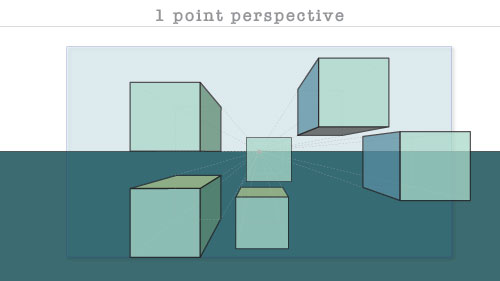
Based on the position of the box to the vanishing point and horizon line – you can see 3 sides, 2 sides, or just 1.

In 1 pt. perspective: all vertical lines stay vertical.

In 1 pt. perspective: all horizontal lines, that are parallel to the picture plane – stay horizontal
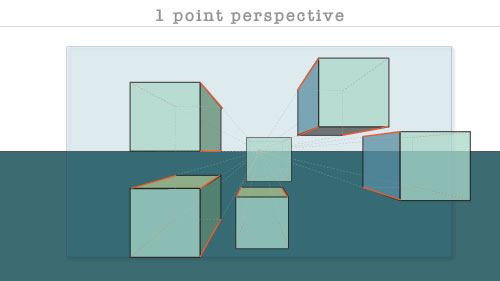
All horizontal lines, that show depth and are parallel in real life – in 1 point perspective become receding lines and go to the vanishing point.
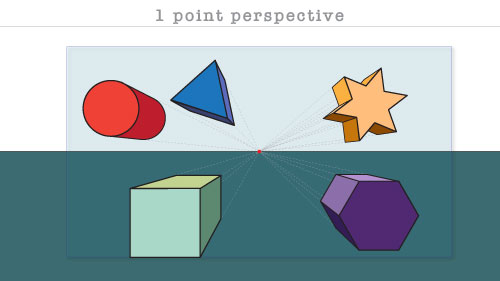
Same rules and steps apply to any form if one of its sides is parallel to the picture plane.
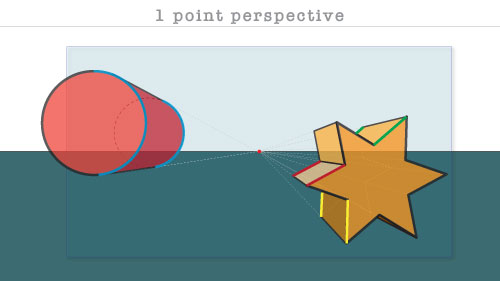
The front and back corners of the same side are always parallel in 1 point perspective.

